
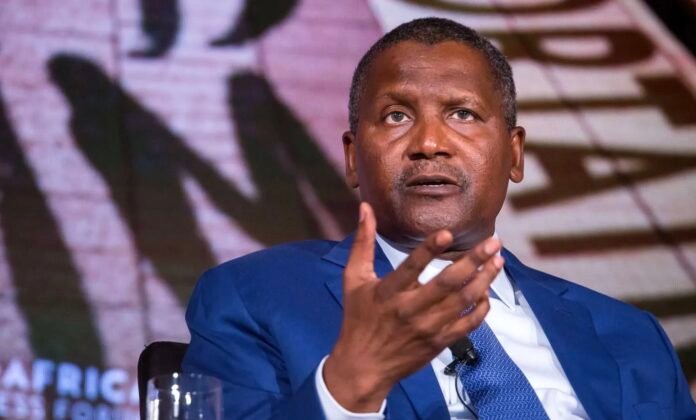
Aliko Dangote, Africa’s richest businessman, has intensified his public dispute with Nigeria’s petroleum regulators, accusing them of policies that favour fuel imports at the expense of local refining and threatening the country’s long-term energy security.
Clash over fuel imports
Speaking on Sunday at his 650,000-barrel-per-day Dangote Refinery in Lagos, Dangote said the continued importation of refined petroleum products was undermining domestic production, discouraging investment, and exporting jobs abroad.
“You don’t use imports to checkmate domestic potential,” he told reporters, arguing that Nigeria’s industrial ambitions cannot be achieved if locally produced fuel is crowded out by cheaper imports.
Nigeria is Africa’s largest crude oil producer but has historically depended on imported fuel due to decades of underperforming state-owned refineries. The Dangote Refinery, one of the world’s largest single-train facilities, was built to reverse that trend and save billions of dollars in foreign exchange.
Call for investigation
Dangote called for an official inquiry into Farouk Ahmed, head of the Nigerian Midstream and Downstream Petroleum Regulatory Authority (NMDPRA), citing concerns about regulatory decisions and alleging that the official’s private expenditures exceeded legitimate earnings.
Ahmed did not immediately respond to requests for comment. However, he has previously argued that the Dangote Refinery is seeking to dominate petroleum product sales and that its output alone cannot meet Nigeria’s daily fuel demand.
Dispute over capacity and demand
The regulator has said local refineries cannot currently satisfy Nigeria’s estimated daily demand of about 55 million litres of petroleum products. Last month, it reportedly advised President Bola Tinubu against banning fuel imports, warning of potential supply shortages.
Dangote has strongly disputed these claims, accusing the regulator of misrepresenting his refinery’s capacity by relying on product offtake figures rather than actual production data.
Crude supply challenges
Another major point of contention is crude oil supply. Dangote said the refinery has struggled to secure sufficient domestic crude because regulators have failed to enforce a policy that prioritises supply to local refineries before crude is exported.
As a result, the facility currently imports around 100 million barrels of crude oil annually, a figure Dangote said could double following planned expansion, given limited access to local supply.
Expansion and future plans
Despite regulatory hurdles, Dangote said he remains committed to expanding the refinery and protecting the massive investment, describing the project as “too big to fail.”
He also reaffirmed plans to list the refinery on Nigeria’s stock exchange and to pay dividends in U.S. dollars, saying the move would allow ordinary Nigerians to directly benefit from the country’s industrial growth.
Nigeria’s reliance on imported fuel has long strained public finances and foreign reserves. Analysts say the outcome of the dispute between Dangote and regulators could shape the future of Nigeria’s downstream oil sector and determine how quickly the country reduces its dependence on fuel imports.
Source:Africa Publicity