
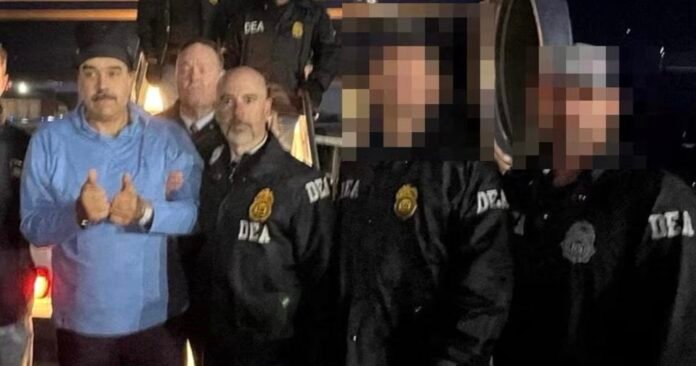
Nicolás Maduro, Venezuela’s Captured president is expected to appear in a federal court in Manhattan on Monday to face a sweeping set of U.S. charges, including narco-terrorism, following his dramatic capture by U.S. forces over the weekend.
Maduro, 63, and his wife, Cilia Flores, are currently being held in a federal detention facility in Brooklyn. Both are scheduled to appear before U.S. District Judge Alvin K. Hellerstein at 12:00 p.m. EST (1700 GMT). Court officials have not confirmed whether either defendant has secured legal representation or intends to enter a plea at the initial hearing.
Charges and Allegations
U.S. prosecutors accuse Maduro of leading a long-running, state-backed cocaine trafficking operation involving senior Venezuelan political and military figures. According to court filings, the alleged network collaborated with major international criminal and militant groups to transport large quantities of cocaine into the United States.
Maduro faces multiple counts, including:
• Narco-terrorism
• Conspiracy to import cocaine into the United States
• Possession of machine guns and destructive devices
• Conspiracy involving machine guns and destructive devices
If convicted, he could face decades in prison or life sentences on each charge.
Expanded Indictment
Maduro was first indicted by U.S. authorities in 2020, but a newly unsealed indictment released on Saturday significantly broadens the scope of the case. Prosecutors allege that Maduro personally supervised a cocaine trafficking operation that partnered with criminal organisations such as Mexico’s Sinaloa and Zetas cartels, Colombia’s FARC, and Venezuela’s Tren de Aragua gang.
The indictment further claims that during his time as Venezuela’s foreign minister between 2006 and 2013, Maduro arranged diplomatic cover for drug flights and sold Venezuelan passports to known traffickers. Prosecutors also allege that both Maduro and Flores used state-linked armed groups to traffic cocaine seized by authorities and ordered violent acts—including kidnappings and killings—to protect the operation.
Alleged Abuse of State Power
U.S. authorities say that after assuming the presidency in 2013, Maduro directed trafficking routes, deployed the military to secure shipments, and used presidential facilities to facilitate drug movements. One allegation describes how Maduro ordered new smuggling routes after French authorities intercepted a shipment, while low-ranking officials were arrested to divert attention.
Legal and Political Fallout
Legal analysts note that prosecutors will need to present strong evidence tying Maduro directly to operational decisions, which could be challenging if actions were delegated through intermediaries.
Maduro ruled Venezuela for more than 12 years, overseeing severe economic collapse, widespread shortages, and mass emigration. The United States has regarded him as an illegitimate leader since the 2018 election, which Washington and other governments said was marred by serious irregularities.
His capture followed weeks of escalating pressure under U.S. President Donald Trump, including seizures of vessels suspected of transporting sanctioned Venezuelan oil and targeted military actions against suspected drug-trafficking operations.
International Reaction
The legality of the U.S. raid has been questioned by international law experts, some of whom argue it undermines established norms of sovereignty. The United Nations Security Council is expected to convene on Monday to discuss the incident. UN Secretary-General António Guterres has reportedly described the operation as a dangerous precedent.
Russia and China, both key allies of Venezuela, have strongly criticised the U.S. action, warning it could further destabilise the region and set a troubling example for international relations.
Maduro’s court appearance is expected to mark the beginning of a closely watched legal process with far-reaching political and diplomatic implications.
Source: Africa Publicity