

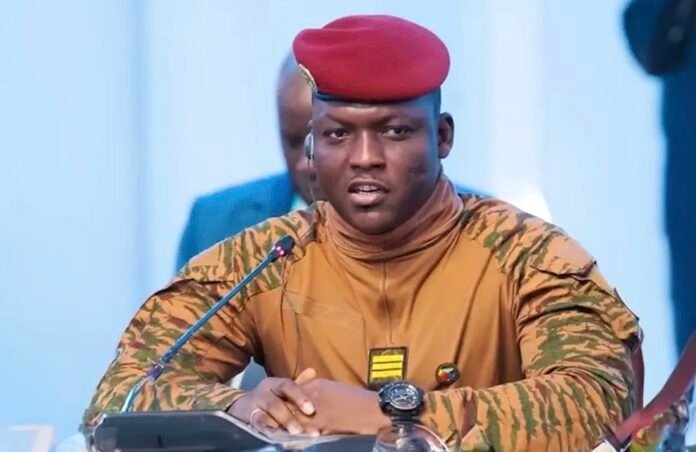
Burkina Faso has reinstated the death penalty for a set of serious crimes, seven years after it was abolished, as part of a comprehensive overhaul of the country’s justice system. The decision comes amid rising concerns over terrorism, espionage, and other security threats in the Sahel region.
The Council of Ministers approved a draft bill for a revised Penal Code on December 4, 2025, which includes the reintroduction of capital punishment for offenses considered particularly egregious. According to Edasso Rodrigue Bayala, Minister of Justice and Human Rights, responsible for Relations with Institutions, the reforms aim to create a justice framework that aligns with the “profound aspirations of the Burkinabe people.”
“The draft Penal Code introduces the death penalty for high treason, acts of terrorism, espionage, and other serious infractions,” Bayala stated during a press briefing. He emphasized that the reinstatement is narrowly targeted, focusing on crimes that threaten national security and public order, rather than ordinary criminal offenses.
The proposed code also includes other notable changes. Community service has been formally enshrined as a principal sentencing option, signaling a shift toward alternative punishments for lesser offenses. Additionally, the legislation criminalizes the promotion or practice of homosexual acts, reflecting the government’s conservative stance on social issues.
Financial penalties have been substantially increased across the board. Fines for misdemeanors and felonies have doubled, with minimum amounts rising from 250,000 CFA francs to 500,000 CFA francs (roughly $820 USD). Road traffic offenses, a major source of fatalities in the country, have received particularly stringent penalties. Bayala justified the move, noting that “90 to 95% of traffic accidents that cause mourning among Burkinabe families are the fault of the user.”
Economic crimes, including embezzlement and corruption, are subject to harsher sentences under the new code. In cases where the embezzled amount equals or exceeds 5 billion CFA francs ($8.2 million USD), perpetrators can now face life imprisonment. The minister underscored that these reforms aim to strengthen accountability in both the public and private sectors, tackling systemic corruption that has long undermined governance in Burkina Faso.
The reintroduction of the death penalty marks a significant departure from 2018, when former President Roch Marc Christian Kaboré abolished capital punishment for ordinary crimes. At the time, the move was widely praised by international human rights organizations, which saw it as a step toward aligning Burkina Faso with global trends in human rights and criminal justice reform.
However, the government has framed the reinstatement as a necessary measure in the context of rising threats from extremist groups in the Sahel. Burkina Faso has faced increasing attacks from jihadist groups affiliated with Al-Qaeda and the Islamic State, which have killed civilians, targeted security forces, and disrupted local economies. Security experts argue that the reinstatement of the death penalty is intended to serve both as a deterrent and as a signal of the state’s commitment to maintaining order amid growing instability.
Human rights advocates have already voiced concern over the decision. Organizations such as Amnesty International argue that reinstating capital punishment could undermine progress made in human rights and justice reform and may exacerbate abuses in a justice system already struggling with limited resources and judicial independence.
Despite these concerns, Burkina Faso’s government has emphasized that the new Penal Code represents a broad reform initiative, designed to modernize the country’s criminal justice system while addressing contemporary social, economic, and security challenges. The government has invited public feedback on the draft before it is formally adopted by parliament, signaling a degree of consultation in the legislative process.
Source:Africa Publicity
Read Also…
Violence Erupts in Eastern DR Congo Hours After U.S.-Brokered Peace Deal Signing
Rising Violence in Northern Mozambique Displaces Over 100,000 as Humanitarian Aid Declines, UN Warns
Nigerian Experts Advocate Drone Technology as Key Weapon Against Rising Insecurity