
Remittance inflows from the United Kingdom remain a major pillar of Ghana’s foreign exchange earnings, but their share of total inflows has declined sharply, prompting the Bank of Ghana (BoG) to call for new strategies to better leverage diaspora funds for long-term economic growth.
Data released by the central bank shows that between January and September 2025, remittances from the UK accounted for about 17.5 per cent of total inflows into Ghana. This represents a significant drop from the same period in 2024, when the UK corridor contributed approximately 28 per cent, making it Ghana’s largest single remittance source at the time.
BoG raises concern over trend
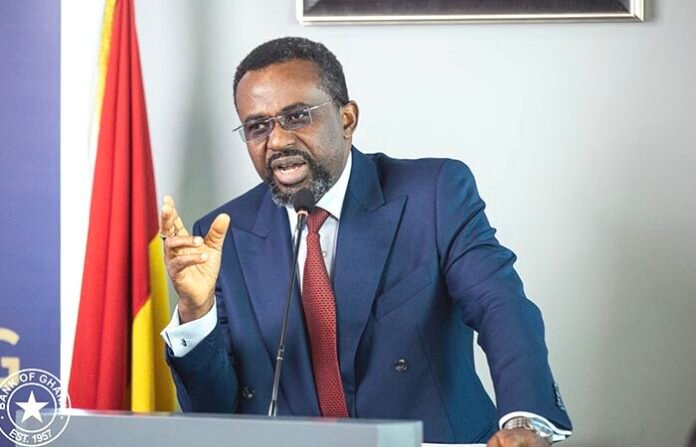
Speaking at the London–Accra Economic Growth Summit held at Bank Square in Accra, BoG Governor Dr. Johnson Asiama said the figures underscore both the continued importance of the UK-Ghana remittance corridor and the urgency of rethinking how diaspora inflows are utilised.
“Diaspora inflows must be harnessed beyond consumption and deliberately channelled into sustainable investment — investment that supports long-term growth,” Dr. Asiama said.
He noted that while remittances continue to play a vital role in household welfare, balance-of-payments support and macroeconomic stability, their broader developmental impact remains underexploited.
From consumption to investment
According to the Governor, remittances have strong potential to finance productive sectors of the economy if properly structured. These include small and medium-sized enterprises (SMEs), housing development, agribusiness modernisation and youth employment initiatives.
“When strategically channelled, diaspora funds can help expand productive capacity, deepen financial inclusion and support skills and knowledge transfer,” he said.
Dr. Asiama described remittances as a “structurally important and counter-cyclical source of foreign exchange”, particularly at a time when Ghana faces volatility in global capital markets and tightening external financing conditions.
Policy reforms and incentives
Despite the decline in the UK’s share, the BoG Governor said there remains “considerable scope” to scale up remittance inflows through targeted policy interventions. These include incentive-based investment products for the diaspora, improved remittance infrastructure, and stronger links between remittances and domestic capital markets.
He added that the central bank is working to strengthen payment systems and regulatory frameworks to ensure remittance flows remain efficient, transparent and supportive of foreign exchange market stability.
Strategic role of the diaspora
Dr. Asiama stressed that Ghana’s diaspora should be viewed not only as a source of emergency support during economic downturns, but as a long-term partner in national development.
“Our objective is to position diaspora capital as a catalyst for growth — not just a safety net,” he said.
The UK is home to one of Ghana’s largest and most economically active diaspora communities, making the recent decline in remittance share a key concern for policymakers as they seek to boost foreign exchange inflows and support economic recovery.
Source: Africa Publicity