

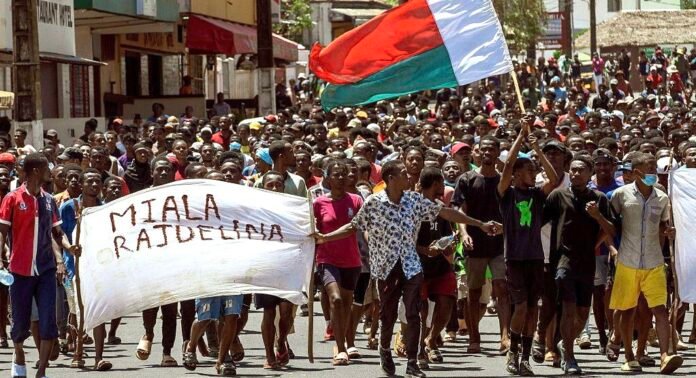
Anti-government protests have reignited across several cities in Madagascar, marking the third consecutive week of demonstrations now calling for President Andry Rajoelina’s resignation.
In the capital, Antananarivo, police fired teargas to disperse crowds of protesters, many of whom were university students. The demonstrations, which began last month over persistent water and power shortages, have since expanded to include broader grievances over corruption, poverty, and governance.
Inspired by recent “Gen Z” protest movements in Kenya and Nepal, the unrest represents the most significant wave of public dissent Madagascar has witnessed in years. Local television broadcasts on Monday showed clashes between police and demonstrators in the southern city of Toliara and the northern city of Diego Suarez.
Despite the nation’s rich mineral resources, fertile land, and unique biodiversity, Madagascar remains among the poorest countries in the world. Between its independence in 1960 and 2020, per capita income reportedly declined by 45 percent.
President Rajoelina, 51, dismissed his entire cabinet last week in what many viewed as an attempt to quell growing discontent. However, demonstrators have continued to demand his resignation, saying his administration has failed to address economic hardship and alleged corruption.
According to the United Nations, at least 22 people have died and more than 100 others have been injured since the protests began—figures the Malagasy government disputes.
In a national address on Friday, President Rajoelina said he was open to hearing protesters’ concerns but made no mention of stepping down.
A spokesperson for the presidency told Reuters over the weekend that the movement was being “exploited by political actors seeking to destabilise the country.” She added that “President Rajoelina remains committed to dialogue and to accelerating solutions that improve people’s daily lives.”
The presidency later confirmed that the president had met with several civil society groups on Saturday but offered no details of the discussions.
However, other organisations said they declined the invitation, citing the government’s failure to guarantee protesters’ safety and to release detained demonstrators.
The protests show no sign of easing as frustration continues to mount across the Indian Ocean island nation.
Source:Africa Publicity