
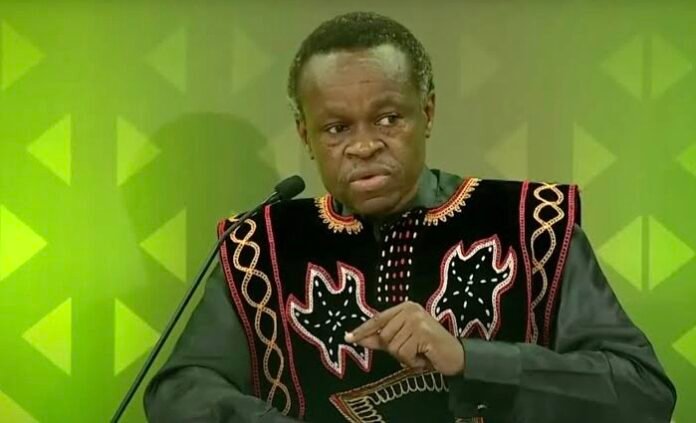
Renowned Pan-Africanist, legal scholar and former Director of Kenya’s Anti-Corruption Commission, Prof. Patrick Loch Otieno Lumumba, has issued a strong warning that Africa’s quest for prosperity, unity and economic integration remains under serious threat as long as insecurity, poor leadership and external control persist across the continent.
Delivering a keynote address at the 2026 African Prosperity Dialogues, Prof. Lumumba urged African leaders, policymakers and development partners to confront uncomfortable realities rather than rely on optimistic slogans about integration and growth. The forum, held under the theme “Empowering SMEs, Women and Youth in Africa’s Single Market: Innovate, Collaborate, Trade,” brought together business leaders, policymakers and civil society actors from across the continent.
According to Lumumba, Africa’s current political and security environment makes it difficult to translate ambitious economic frameworks, such as the African Continental Free Trade Area (AfCFTA), into meaningful benefits for ordinary citizens. He argued that while discussions about a borderless Africa are important, they are meaningless without peace and stability.
He painted a grim picture of the continent’s state, describing Africa as troubled and unstable. He pointed to the ongoing war in Sudan, persistent armed conflict in eastern Democratic Republic of Congo, and the political isolation of several Sahelian countries from African Union activities as clear evidence that the continent is far from being at ease.
Prof. Lumumba recalled earlier commitments by African leaders to “silence the guns,” noting that renewed violence in several regions suggests that those promises have not been fulfilled. In his view, insecurity not only threatens lives but also undermines trade, investment and the free movement of people that are central to Africa’s integration agenda.
Beyond internal conflicts, Lumumba criticised what he described as continued external influence over African political and economic affairs. He argued that international groupings such as the Francophonie and the Commonwealth represent modern extensions of colonial control, allowing former colonial powers to exert influence over African decision-making long after independence.
He warned that Africa cannot claim true sovereignty or development while its policies and institutions remain shaped by external interests. According to him, this dependence weakens Africa’s ability to design home-grown solutions and pursue collective goals without outside interference.
Lumumba further stressed that economic empowerment initiatives targeting small and medium-sized enterprises (SMEs), women, and young people will fail unless they are supported by accountable leadership and strong governance systems. He noted that corruption, political patronage and lack of transparency continue to drain public resources and erode public trust across many African states.
Calling for a shift from rhetoric to action, he urged Africans—particularly civil society groups, the youth and women entrepreneurs—to actively hold leaders accountable. He argued that transformative change will not come solely from policy documents or high-level summits, but from sustained public pressure demanding results, integrity and responsible leadership.
He cautioned against romanticising Pan-African ideals without confronting the hard truths on the ground. In his view, free trade agreements, open borders and innovation strategies cannot succeed in an environment plagued by violence, exclusion and weak institutions.
Prof. Lumumba concluded by reaffirming that Africa’s future depends on peace, justice and ethical leadership. Without these foundations, he warned, the continent risks repeating cycles of instability that continue to delay its long-promised economic and social transformation.
Source: Africa Publicity