
The 2028 elections in Sierra Leone may still seem distant, but the political currents set in motion since the disputed 2023 polls point toward a striking reality: if current trajectories remain unchanged, the race is increasingly becoming the All People’s Congress (APC)’s to lose.
This does not imply an automatic victory for the opposition. Rather, it means the ruling Sierra Leone People’s Party (SLPP) is weakening its own electoral hand through internal fractures, succession anxieties, governance fatigue, and a lingering legitimacy cloud.
In a fragile post–National Unity Agreement environment, the SLPP’s intensifying disunity stands in sharp contrast to the APC’s growing cohesion and grievance-driven momentum.
1. The Lingering Shadow of the 2023 Elections
The political foundation of 2028 is the June 24, 2023 general elections. President Julius Maada Bio was declared winner with roughly 56%, narrowly crossing the 55% threshold required to avoid a runoff. The SLPP also clinched a parliamentary majority with 81 seats to the APC’s 54.
But the victory was clouded by controversy.
The APC outright rejected the outcome, citing systemic irregularities, while international observer missions—including the EU and the Carter Center—highlighted statistical inconsistencies and called for full transparency, particularly the release of polling-station-level results.
To avert national instability, the SLPP and APC entered a mediated National Unity Agreement.
Going into 2028, the implications are clear:
• The SLPP carries a legitimacy challenge—not rejection, but enough doubt to erode confidence in the mandate.
• The APC carries a grievance narrative grounded in remarks made by international observers, not just party rhetoric.
This duality—a questionable mandate vs a grievance infused with restraint—gives the APC emotional and rhetorical power as 2028 approaches.
2. SLPP Internal Rifts and Succession Anxiety
The APC’s growing strength is noticeable, but the SLPP’s biggest obstacle remains internal.
Across political commentary, party grassroots, and media analyses, the ruling party is increasingly portrayed as fragmented, distrustful, and uneasy over succession.
Key indicators include:
• Disputes in lower-level elections
The Political Parties Regulation Commission (PPRC) has intervened multiple times to postpone segments of the SLPP’s internal elections over allegations of irregularities and questionable alterations.
Such interventions reflect not discipline—but deep internal mistrust.
• The ban on early flagbearer campaigns
In September 2025, the SLPP leadership suspended early campaigning to quash rising tension over the 2028 flagbearer contest. While this move was framed as a stabilizing measure, it instead suggested an inability to manage succession transparently.
When open competition is suppressed rather than guided, factions simply reorganize in the shadows. Rumours multiply. Loyalties harden. Suspicion deepens.
Meanwhile, the APC watches comfortably from the sidelines.
Every unresolved grievance within the SLPP risks:
• voter apathy in strongholds,
• quiet defections to the opposition,
• internal sabotage that weakens campaign machinery.
As history shows—from 2007 to 2018—ruling parties often fall not because of external pressure but because of internal erosion.
3. Governance Fatigue and Economic Headwinds—Despite Recent Gains
Governance performance will be central in 2028, and here the SLPP faces both a challenge and an opportunity.
Positive macroeconomic progress must be acknowledged.
To the credit of the current Minister of Finance, Sierra Leone has recently achieved one of its most significant fiscal successes:
inflation has dropped to single digits for the first time in years, driven by tighter monetary coordination, disciplined fiscal policy, and a renewed focus on domestic revenue mobilization.
This is a notable achievement in an otherwise turbulent global economic period. It demonstrates that the SLPP administration is capable of serious corrective policy interventions when necessary.
However—and this is where the political vulnerability lies—macroeconomic indicators do not always translate into everyday relief for ordinary citizens.
Many households continue to experience:
• limited job opportunities,
• rising living costs that far outpace the average person’s income.
For voters, the technical success of lowering inflation does not automatically offset the broader sense of economic hardship built up over several years.
By 2028, after a decade in power, the SLPP’s narrative must contend with fatigue, unmet expectations, and the perception—fair or not—that improvements have come late.
Thus, even positive reforms may struggle to counterbalance the emotional and economic frustrations of the electorate.
4. APC’s Emerging Structural Advantage
To describe the 2028 race as “APC’s to lose” is not a prophecy—it is an observation of structural momentum increasingly tilting in the opposition’s favour.
Key drivers include:
1. A powerful grievance-and-restraint narrative
The APC’s claim of being “wronged” in 2023—but choosing dialogue over confrontation—allows it to appeal to both hardliners and moderates.
It can cast 2028 as a peaceful correction, not a rebellion.
2. Reinforcement from international observer concerns
Because observer missions themselves questioned aspects of the 2023 process, the APC’s grievance has documented foundations. This matters both domestically and internationally.
3. Potential unity vs SLPP’s disarray
If the SLPP enters 2028 divided by succession politics while the APC rallies behind a unified ticket, the psychological advantage shifts decisively.
Perception matters: united opposition vs fragmented incumbency is a dangerous equation for any ruling party.
5. Why “APC’s to Lose” Is Not Guaranteed
Momentum is not destiny.
The APC could still undermine its advantage if it:
• fails to select a unifying, nationally appealing candidate;
• descends into familiar factionalism;
• relies too heavily on grievance instead of policy;
• allows extremist rhetoric to overshadow statesmanship.
Similarly, the SLPP can regain competitiveness if it:
• conducts a transparent and credible flagbearer selection process;
• builds on the Finance Minister’s macroeconomic gains to deliver visible, felt improvements;
• restores broader trust in institutions and electoral processes.
Thus, the 2028 landscape is dynamic—not predetermined.
Conclusion
The convergence of three dynamics—the unresolved legitimacy cloud from 2023, escalating internal fractures within the SLPP, and governance fatigue despite recent macroeconomic gains—has created a political environment in which the APC enters 2028 with an increasingly structural advantage.
If the SLPP continues to battle itself internally while asking voters for renewed trust externally, the APC will not require exceptional brilliance to prevail—only discipline, coherence, and peace.
Unless the SLPP dramatically resets its internal dynamics and amplifies its policy successes with tangible, everyday impact, the 2028 elections are steadily shaping up to be the APC’s to lose.
About the author:
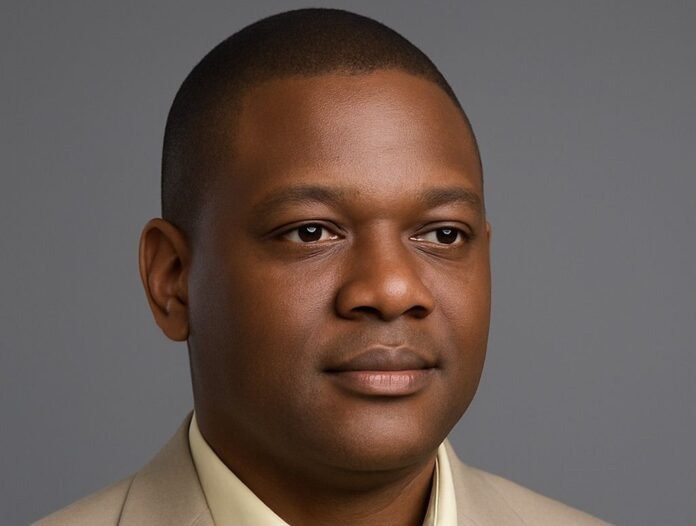
Foday M. Daboh is a Political Analyst & Public Policy Professional. He holds a B.A. Political Science & International Relations, University of Pennsylvania
Master of Public Policy (MPP), University of Pennsylvania
Postgraduate Certificate in Applied Behavior Analysis
Disclaimer:
The views expressed in this commentary are solely those of the author and do not in anyway reflect the opinions or editorial policy of Africa Publicity