

Growing consensus has emerged among policy thinkers, researchers, private sector actors, several parliamentary select committees and development partners that Ghana’s sanitation challenge is not merely an environmental inconvenience. It is an economic emergency.
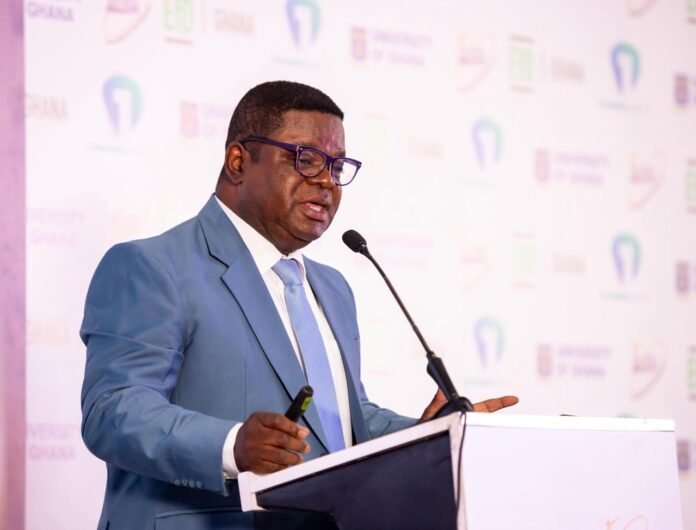
At a high-level stakeholder forum held at the Alisa Hotel in Accra, convened by the Institute of Statistical, Social and Economic Research of the University of Ghana in collaboration with Environment for Development and supported by Channel 1 TV, participants strongly backed the establishment of an independent sanitation regulatory authority.
Their reasoning was direct. Ghana’s Water, Sanitation and Hygiene sector operates without a central regulator to coordinate policy, standardise operations and enforce compliance.
Institutions function, private companies invest, Metropolitan, Municipal and District Assemblies budget annually, yet the system lacks a unified supervisory body. Stakeholders argue that this fragmentation is costing the nation dearly.
Head of Climate Action and Sustainability and Partnerships at the Climate Action, Ing. Godfred Boadi Esq., described the absence of a regulator between practitioners, stakeholders and the supervising ministry as deeply unfortunate, noting that sanitation remains the only major sector operating without such oversight.
Economic Imbalance
Presenting the study findings, Prof. Peter Quartey, Immediate Past Director of ISSER and Principal Investigator, underscored the scale of the imbalance: Ghana suffers approximately 30 times more from the consequences of poor waste management than it spends to prevent them.
The study estimates that annual health and productivity losses exceed GHS 6.2 billion, including about GHS 5.58 billion in direct medical expenses.
In contrast, Metropolitan, Municipal and District Assemblies collectively spend roughly GHS 180.2 million each year on waste management.
Dr. Kwame Adjei-Mantey, Lead Investigator, further explained that sanitation-related diseases such as malaria, cholera and typhoid result in 31.9 million lost work and school days annually, alongside an estimated 107,222 premature deaths.
The cost extends beyond dirty drains. It affects household incomes, school attendance, workforce productivity and national output.
Sanitation as Economic Strategy
Contrary to the perception that sanitation is a fiscal burden, the study positions it as a high-return investment. Increasing spending to the lower-middle-income benchmark of GHS 1,028 per tonne of waste could yield GHS 556 in discounted annual benefits for every GHS 1 invested.
Between 2025 and 2032, projected annual economic benefits range from GHS 58.1 billion to GHS 67.2 billion. The same investment could reduce sanitation-related morbidity by 97.4 percent and mortality by 81 percent.
Stakeholders argued that such returns justify the urgent establishment of a regulatory authority to oversee standards, coordinate policy, integrate informal operators and ensure accountability across the sector.
Targeted Reform and Institutional Strengthening
Participants recommended prioritising sanitation hotspots such as dense urban slums and peri-urban communities, formalising informal waste collectors, strengthening local governance capacity and integrating sanitation data into budgeting frameworks.
Sanitation, they emphasised, must shift from being treated as residual environmental spending to being recognised as a frontline public health and economic development investment.
By the end of the forum, the message was unmistakable: without regulatory reform, increased funding alone may not deliver optimal results.
For many in attendance, the establishment of a sanitation regulatory authority represents not bureaucratic expansion, but structural correction.
In addition, there must be a consistently transparent funding source that will effectively fund waste management and sanitation and the authority should be regulated in such a way that it is able to generate revenue to sustain the sector operation.
I’m Not Killing Opposition Politicians In Nigeria, I have No Gun – Says Tinubu