

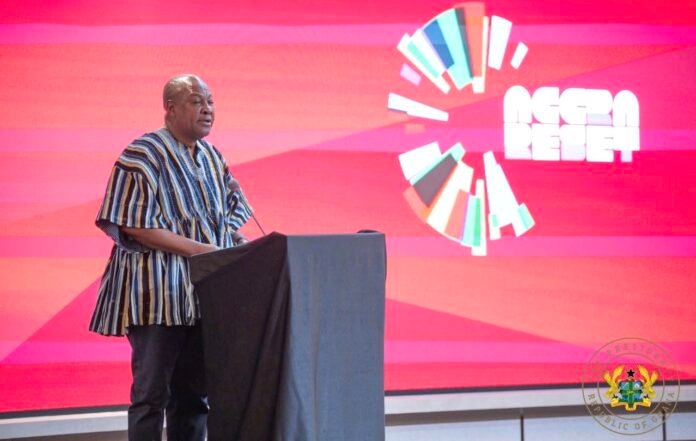
President John Dramani Mahama has announced a major policy shift in Ghana’s cocoa sector, declaring that the country will stop relying on foreign loans to finance cocoa purchases and instead fund them with domestic resources.
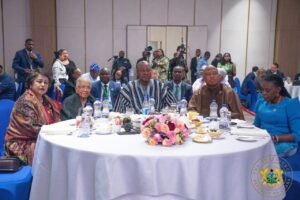
Speaking at the Accra Reset Addis Reckoning in Addis Ababa on Saturday, February 14, the President said Ghana has the financial strength and institutional capacity to independently purchase cocoa from farmers without external credit facilities.
For decades, Ghana has depended on syndicated foreign loans, using cocoa beans as collateral to raise funds for annual purchases. President Mahama said his administration plans to end this arrangement by issuing domestic bonds to raise cedi financing locally.
According to him, continuing to collateralise cocoa beans under foreign agreements has limited Ghana’s control over its most important export.
“We’re going to stop foreign funding for the purchase of our cocoa. We have enough cedis in Ghana to pay for our cocoa. We don’t need to collateralise the beans,” he said.
President Mahama explained that the current system forces Ghana to export large volumes of raw cocoa beans, even when the country has the capacity to process them locally. He noted that Ghana can process up to 400,000 tonnes of cocoa, but collateral obligations make it difficult to allocate beans to domestic processors.
This, he said, undermines efforts to add value locally, create jobs, and increase export earnings from finished or semi-finished cocoa products.
The President linked the policy change to his broader “Accra Reset” agenda, which focuses on economic sovereignty, value addition, and reducing overdependence on external financing.
By funding cocoa purchases locally and prioritising domestic processing, the government believes Ghana can retain more value from its cocoa industry while strengthening farmer payments and local manufacturing.
The proposed shift is expected to spark discussions among industry players, financial institutions, and cocoa farmers as implementation details are rolled out.
Source: Africa Publicity