

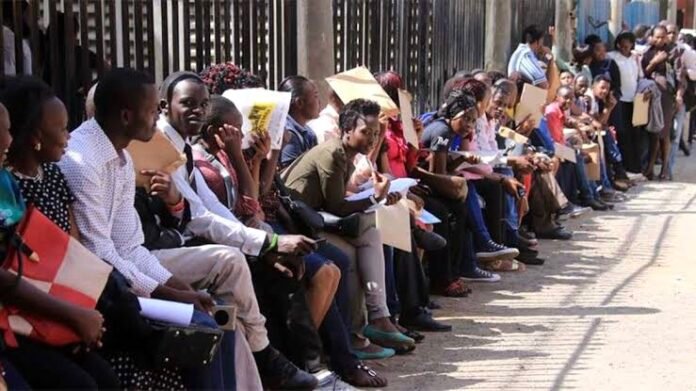
More than 227,000 Ghanaians are now facing a compounded crisis of food insecurity, multidimensional poverty, and unemployment, according to the latest data released by the Ghana Statistical Service (GSS), raising concerns that economic recovery is failing to reach the country’s most vulnerable populations.
The new figures, drawn from the third quarter (Q3) of 2025, reveal that 227,519 people were simultaneously food insecure, poor across multiple dimensions, and without jobs. This marks a sharp increase of 19,455 people compared to the 208,064 recorded in the second quarter (Q2) of the same year. In percentage terms, this represents a 9.4 percent rise within just three months.
The increase has occurred despite a modest national improvement in severe food insecurity levels. GSS data indicate that the proportion of the population experiencing severe food insecurity declined from 5.1 percent in Q2 2025 to 4.6 percent in Q3. While this reduction suggests some progress at the national level, it masks the growing number of people facing overlapping and reinforcing forms of hardship.

Millions Still Struggling to Access Food
Beyond those experiencing multiple vulnerabilities, the report highlights the sheer scale of food access challenges in the country. The number of people classified as “only food insecure” reached a peak of 4,072,199 in Q2 2025, underscoring how widespread food-related stress remains even among households not captured in the most extreme vulnerability category.
Analysts note that food insecurity often acts as a gateway problem, pushing already fragile households deeper into poverty and making it harder for unemployed individuals to seek or sustain work. Rising food prices, climate-related shocks affecting agriculture, and uneven income recovery continue to exert pressure on household budgets, particularly among low-income groups.
Gender and Rural Inequality Remain Stark
The GSS report also draws attention to persistent gender and geographic inequalities. Severe food insecurity was most pronounced among rural female-headed households, where the rate peaked at 8.1 percent. This finding highlights the disproportionate burden borne by women, especially in rural areas where access to land, credit, markets, and social protection is often limited.
Experts say female-headed households are more vulnerable due to a combination of lower average incomes, care responsibilities, and reduced access to productive resources. In rural settings, these challenges are compounded by dependence on rain-fed agriculture and limited alternative livelihood opportunities.
Economic Growth Not Translating Into Shared Welfare
The data emerge at a time when Ghana has been reporting improvements in key macroeconomic indicators, including growth in selected productive sectors and relative stability in headline economic metrics. However, the GSS findings suggest that the benefits of this recovery are not being evenly distributed.
While overall food insecurity rates have edged down, the rise in people experiencing simultaneous food insecurity, poverty, and unemployment signals deep structural challenges. Economists warn that growth without inclusion risks leaving behind a growing underclass trapped in cycles of deprivation.
Implications for Sustainable Development Goals
The trend poses a serious challenge to Ghana’s efforts to meet the 2030 Sustainable Development Goals (SDGs), particularly Goal 2 (Zero Hunger) and Goal 1 (No Poverty). With just a few years remaining to the SDG deadline, the persistence of overlapping vulnerabilities threatens to slow or reverse gains made over the past decade.
Without deliberate and targeted interventions, analysts caution that households facing multiple deprivations may become increasingly difficult to reach through conventional social and economic policies.
Call for Targeted Interventions
Speaking at a press briefing in Accra, Government Statistician Dr. Alhassan Iddrisu urged policymakers to rethink existing approaches and focus resources where the need is greatest.
“We must move away from blanket policies and instead target high-burden regions with tailored food security, agricultural productivity, and market-access solutions,” he said.
Dr. Iddrisu emphasised that data-driven targeting is critical to ensuring that interventions reach households experiencing the most severe and overlapping forms of vulnerability.
As Ghana navigates economic recovery and development planning, the latest GSS data serve as a reminder that national averages can obscure deep inequalities—and that addressing food insecurity, poverty, and unemployment together may be key to building resilient and inclusive growth.
Source: Africa Publicity