

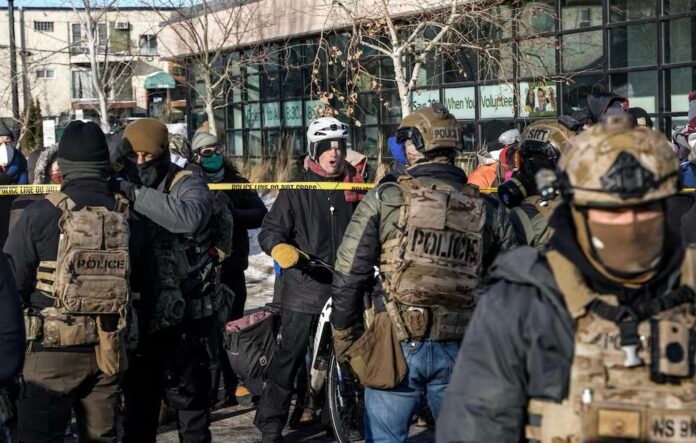
The fatal shooting of a U.S. citizen by federal immigration agents in Minneapolis on Saturday has ignited widespread protests, intensified political tensions, and renewed scrutiny of federal immigration enforcement operations under the Trump administration.
U.S. Department of Homeland Security (DHS) officials confirmed that Border Patrol agents shot and killed 37-year-old Alex Pretti during an immigration enforcement operation. DHS described the incident as an act of self-defense, alleging that Pretti approached agents with a handgun and resisted efforts to disarm him.
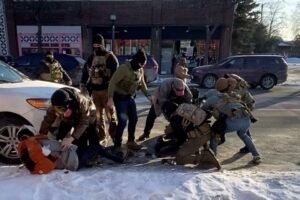
However, multiple bystander videos reviewed by Reuters appear to contradict that account. The footage shows Pretti, an intensive care nurse, holding a mobile phone rather than a firearm as he filmed agents confronting protesters. In the video, Pretti is seen stepping in as agents pushed two women to the ground. Moments later, agents restrained him, and shots were fired while he was on the ground.
Federal authorities later released an image of a handgun they claim belonged to Pretti. Minneapolis Police Chief Brian O’Hara confirmed that Pretti was a lawful gun owner with no criminal history aside from minor traffic offenses.
Conflicting Accounts and Investigation Dispute:
Minnesota Governor Tim Walz strongly criticized federal authorities, calling the incident “deeply disturbing” and accusing them of obstructing an independent investigation. According to Drew Evans, head of the Minnesota Bureau of Criminal Apprehension, federal agents prevented state investigators from immediately accessing the scene.
“The federal government cannot be trusted to lead this investigation,” Walz said, announcing that the state would pursue its own inquiry.
Homeland Security Secretary Kristi Noem defended the agents’ actions, stating that Pretti “was not there to peacefully protest” and accused him of attempting to incite violence, though she did not confirm whether he drew his weapon.
Public Reaction and Protests:
Pretti’s death prompted large demonstrations in Minneapolis, with hundreds gathering near the shooting site. Protests also spread to major cities including New York, Washington, D.C., and San Francisco. Federal agents used crowd-control measures as tensions escalated.
The unrest led to several disruptions across the city. The Minneapolis Institute of Art closed temporarily due to safety concerns, and the NBA postponed a Minnesota Timberwolves game. City and state law enforcement later moved in to stabilize the situation after federal agents withdrew from the area.
Political Fallout:
The shooting marked the second killing of a U.S. citizen by federal immigration agents this month, following the January 7 death of Renee Good. The incidents have intensified clashes between state leaders and the White House.
Governor Walz and Minneapolis Mayor Jacob Frey called for an immediate halt to federal immigration enforcement operations in the city, questioning how many more lives would be lost before policy changes are made.
President Donald Trump responded by accusing local leaders of inflaming unrest, while Vice President JD Vance criticized Minnesota officials for not providing sufficient local police support to federal agents—claims Walz strongly rejected.
Even before Saturday’s shooting, Minneapolis residents had been protesting aggressive immigration enforcement tactics, including the detention of U.S. citizens and schoolchildren. One day earlier, more than 10,000 people demonstrated against the ongoing operations.
As investigations continue, the incident has become a flashpoint in the national debate over immigration enforcement, use of force by federal agents, and accountability when U.S. citizens are harmed during such operations.
Source: Africa Publicity