
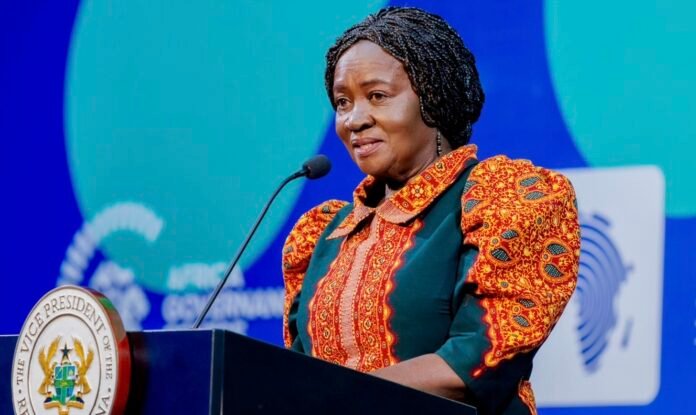
Ghana should begin redefining its engagement with the International Monetary Fund (IMF), moving away from emergency financial support toward a long-term partnership that supports sustainable growth and national development, Vice President Prof. Naana Jane Opoku-Agyemang has said.
Addressing a meeting of IMF country representatives and regional directors for Africa in Accra on Tuesday, Prof. Opoku-Agyemang noted that Ghana’s macroeconomic conditions have shown clear signs of improvement following a period of severe economic stress.
Signs of Recovery
According to the Vice President, recent gains include:
• A return to single-digit inflation
• Greater stability of the Ghanaian cedi
• Improved Gross Domestic Product (GDP) growth
She explained that these outcomes were achieved through “difficult but nationally owned reforms,” implemented under Ghana’s IMF-supported economic programme.
Call for a New Engagement Model
Prof. Opoku-Agyemang argued that Ghana’s progress should serve as a foundation for a more balanced relationship with the IMF—one that goes beyond crisis management and places greater emphasis on development, confidence-building, and policy independence.
“The true measure of success is not only compliance with an IMF programme,” she said, “but the restoration of confidence and policy autonomy.” She stressed that economic stability cannot be imposed externally but must be built through strong institutions, fiscal discipline, and public trust.
Africa’s Role in Its Own Growth
While reaffirming the importance of international cooperation, the Vice President highlighted Africa’s growing capacity to shape its own economic future. She pointed to initiatives such as the African Continental Free Trade Area (AfCFTA) as key opportunities for intra-African trade, industrialization, and long-term resilience.
Looking Beyond the IMF Programme
As Ghana works toward exiting the current IMF-supported arrangement, Prof. Opoku-Agyemang acknowledged that such programmes are often challenging and imperfect. However, she emphasized that during periods of economic strain, credibility, pragmatism, and disciplined policymaking are essential.
Her remarks come as Ghana continues efforts to stabilize its economy following debt restructuring and fiscal reforms aimed at restoring investor confidence and laying the groundwork for sustained growth.
Source: Africa Publicity