

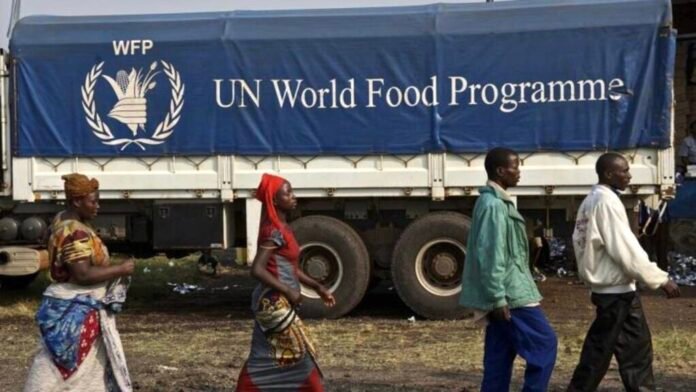
The United Nations World Food Programme (WFP) has sounded a stark warning that up to 55 million people in West and Central Africa could face crisis-level hunger or worse during the June–August 2026 lean season, unless urgent funding and humanitarian action are mobilised.
In a statement released on Friday, the UN agency said worsening food insecurity across the region is being driven by armed conflict, displacement, economic pressures and sharp reductions in humanitarian funding, with Nigeria ranked among the four hardest-hit countries.
Nigeria among epicentres of the crisis
According to the WFP, Nigeria, Chad, Cameroon and Niger together account for 77 per cent of the region’s food-insecure population.
In Nigeria, the agency raised particular alarm over about 15,000 people in Borno State who are now at risk of catastrophic hunger (IPC Phase 5) — the most severe classification — for the first time in nearly a decade. The situation has been linked to prolonged insurgency in the northeast and shrinking humanitarian assistance.
Children at growing risk
The WFP projected that more than 13 million children across West and Central Africa will suffer from acute malnutrition in 2026, highlighting the long-term human cost of the crisis.
Findings from the latest Cadre Harmonisé analysis — the regional food security assessment tool — show that over three million people are expected to face emergency levels of hunger (IPC Phase 4) this year, more than double the 1.5 million recorded in 2020.
Funding shortfalls force scale-back
WFP Deputy Regional Director for West and Central Africa, Sarah Longford, said reductions in humanitarian funding in 2025 have significantly worsened hunger and malnutrition across the region.
“As needs outpace funding, so too does the risk of young people falling into desperation,” Longford said, warning that unchecked hunger could fuel further unrest, displacement and conflict.
In Nigeria, funding gaps forced the WFP to cut nutrition programmes affecting more than 300,000 children, while malnutrition levels in several northern states have deteriorated from “serious” to “critical.”
The agency disclosed that it can currently reach only 72,000 people in Nigeria in February, compared with 1.3 million people assisted during the 2025 lean season, describing the reduction as drastic at a time when needs are rising rapidly.
Regional impact beyond Nigeria
Elsewhere in the region, the outlook is equally troubling. In Mali, reduced food rations have contributed to a 64 per cent increase in acute hunger in some areas since 2023, while communities that received full support recorded a 34 per cent decline. Continued insecurity has also disrupted key supply routes, leaving 1.5 million people facing crisis-level hunger.
In Cameroon, the WFP warned that over 500,000 vulnerable people could soon be cut off from life-saving assistance without immediate funding.
While the agency did not name specific donors, humanitarian groups have repeatedly pointed to foreign aid cuts by the United States and several European countries, partly linked to increased defence spending, as a major factor behind the shortfall.
Call for urgent action
Despite the grim outlook, the WFP said its programmes continue to deliver results where funding is available. It noted that land restoration projects in the Sahel generate up to $30 for every $1 invested, with 300,000 hectares of farmland rehabilitated since 2018, benefiting more than four million people across five countries.
However, the agency stressed that sustaining these gains will require more than $453 million over the next six months to maintain humanitarian operations across West and Central Africa.
“To break the cycle of hunger for future generations, we need a paradigm shift in 2026,” Longford said, calling on governments and partners to increase investment in preparedness, early action and resilience-building to reduce long-term dependence on aid.
Source: Africa Publicity