
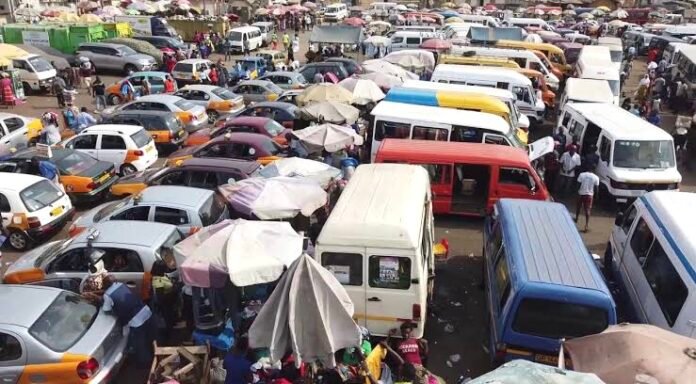
The Chamber of Petroleum Consumers (COPEC) has criticised Ghana’s public transport system, describing it as poorly planned, underfunded and inadequately regulated, amid worsening commuting conditions in the Greater Accra Region.
Speaking on The Big Issue programme on Channel One TV on Saturday, January 17, the Executive Secretary of COPEC, Mr Duncan Amoah, said the daily struggles faced by commuters reflect long-standing structural failures that have not been addressed by the Ministry of Transport.
“A system left to struggle”
Mr Amoah argued that public transport challenges in Accra are not recent but the result of years of neglect and weak policy direction.
“These are systemic issues we have refused to deal with. Public transport planning has failed completely. We depend on a system that is neither properly funded nor effectively regulated,” he stated.
According to him, the absence of a clear national framework for public transport has left the sector heavily dependent on private operators, many of whom operate under difficult conditions with little state support.
Focus on fares, not reforms
Mr Amoah further criticised the nature of engagement between authorities and transport unions, noting that discussions are often limited to fare increases, especially when fuel prices rise.
He said broader concerns such as vehicle maintenance, safety standards, driver welfare, fleet renewal and operational efficiency are rarely prioritised in policy conversations.
“The only time authorities engage transport unions is when fares are to be adjusted. There is no meaningful reinvestment by the state to improve the system or support drivers,” he added.
Impact on commuters
His remarks come at a time when commuters in Accra face severe vehicle shortages, particularly during morning and evening peak hours. Many residents report being stranded for long periods along major routes, a situation worsened by rapid urban expansion and population growth in peri-urban communities.
Transport analysts note that the lack of mass transit options, limited integration of bus services and the ageing fleet of commercial vehicles continue to place pressure on the system.
Government response
Meanwhile, Vice President Jane Naana Opoku-Agyemang has reiterated the government’s commitment to modernising and expanding public transport infrastructure, including improving access, efficiency and affordability for commuters.
While acknowledging ongoing challenges, she has indicated that reforms aimed at easing congestion and improving mobility remain a key priority of the government’s broader urban development agenda.
COPEC, however, insists that without deliberate funding, long-term planning and strong regulation, Ghana’s public transport system will continue to struggle, leaving commuters and drivers to bear the cost of systemic failure.
Source: Africa Publicity