

By Alpha Amadu Jalloh
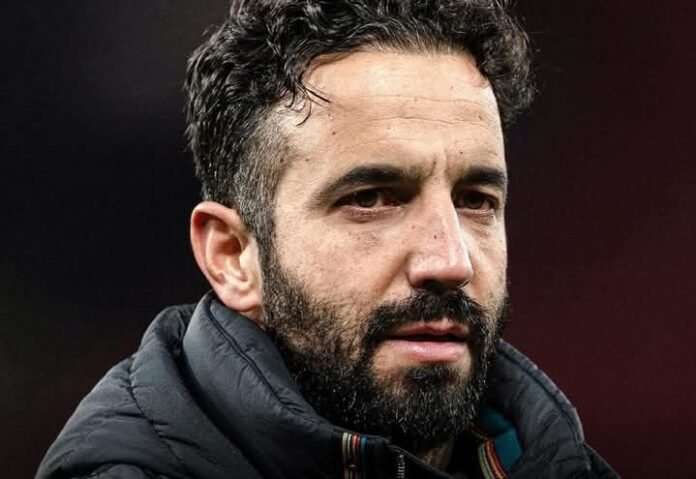
The sacking of Ruben Amorim as manager of Manchester United is not simply another chapter in the club’s turbulent history. It is an indictment of a football culture that has surrendered authority to noise, impatience, and a media driven ecosystem that thrives on destabilisation. Amorim arrived with a clear philosophy, modern tactical ideas, and the courage to confront a club still paralysed by nostalgia. What he did not arrive with was insulation from a commentary industry that feeds on crisis and rarely allows ideas the time required to mature.
Modern football no longer measures progress through structure or coherence. It measures it through immediate gratification. Every match is treated as a verdict. Every setback becomes evidence of incompetence. Amorim’s tenure unfolded under relentless external judgement where reaction consistently outweighed reason. In such an environment, rebuilding is reframed as failure and patience is portrayed as weakness. Clubs speak about long term vision, yet behave as though tomorrow’s headline matters more than tomorrow’s performance.
At the centre of this corrosive climate are former players turned pundits who behave as though football knowledge is their exclusive inheritance. Gary Neville and Jamie Carragher dominate television studios with an authority that is rarely challenged. Their opinions are presented not as perspectives but as judgments. They do not merely analyse games. They shape narratives, stir fan anxiety, and generate a pressure that boards eventually feel compelled to obey.
Gary Neville’s role is especially revealing. He has been given opportunities to translate commentary into management and failed to convince. That experience should have produced humility. Instead, it appears to have sharpened his appetite for critique. From the safety of the studio, he dissects managers working under pressures he himself could not sustain. He is far more effective as a talker than a builder, far more comfortable poking holes than constructing foundations. His interventions often resemble slow erosion rather than balanced analysis, drip feeding doubt until clubs lose confidence and panic.
Jamie Carragher’s punditry introduces an even more troubling dimension. His commentary frequently drifts beyond football critique into a pattern of racialised scrutiny, particularly directed at African players. Errors by African footballers are magnified. Their intelligence is questioned. Their achievements are reframed as luck or system driven success. This is not a coincidence. It is consistency, and consistency reveals bias.
The treatment of Mohamed Salah makes this impossible to dismiss. Salah is not simply a great player. He is one of the greatest performers the Premier League has ever produced. Yet he is persistently subjected to trivial and sometimes absurd criticism. At one point, pundits openly debated the way he walks. That alone should have disqualified the discussion from serious football analysis. Imagine David Beckham being scrutinised in such a manner. The backlash would have been immediate and overwhelming. Headlines would have exploded. Defences would have been mounted across British and European media. But Salah is African, and ridicule becomes acceptable, even normalised.
This selective scrutiny extends beyond individuals to an entire continent. The Africa Cup of Nations is repeatedly framed as an inconvenience to European football. Every tournament is greeted with complaints about timing, disruption, and damage to club schedules, as though African football exists only in relation to Europe’s comfort. Rarely is the same criticism directed at European competitions that congest calendars, exhaust players, and prioritise commercial interest over welfare.
Pundits like Carragher persistently single out Africa and Africans while disguising prejudice as honesty. It is not honest analysis when criticism is unbalanced. It is not insight when it relies on stereotype and contempt. When commentary repeatedly smells of disdain, the issue is not oversensitivity. The issue is bias. At that point, silence would serve the game better than punditry that poisons discussion.
Broadcasters such as Sky Sports and BBC Sport cannot escape responsibility. They provide the platforms, reward outrage with airtime, and elevate loud voices over thoughtful ones. In doing so, they shape public sentiment and indirectly influence boardroom decisions. The sacking of Amorim cannot be separated from this media climate. Executives hear the noise. Fans absorb it. Pressure accumulates. The manager pays the price.
Leagues such as the Premier League, La Liga, and Serie A benefit enormously from African talent and African audiences. Yet respect remains conditional. African players are celebrated for their labour but questioned in their excellence. African tournaments are tolerated but rarely respected. This contradiction sits uncomfortably at the heart of global football.
Ruben Amorim was not targeted because of his identity. He was undone by a system addicted to interference, impatience, and spectacle. His sacking illustrates how managers are now judged less on coherent vision and more on the temperature created by studio punditry. At the same time, the same ecosystem enables racialised scrutiny of African players and African football. These are not identical problems, but they are connected failures of the same culture. Until football confronts both honestly, it will continue to sacrifice integrity for noise, depth for outrage, and fairness for convenience.