
By Alpha Amadu Jalloh
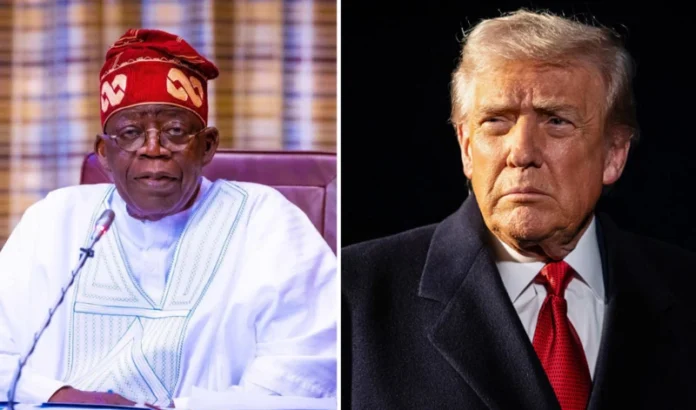
The recent posture adopted by the United States toward Nigeria, wrapped in the language of concern, moral urgency, and selective outrage, must be confronted directly and without diplomatic hesitation. Nigeria is not a fractured society waiting to be interpreted through foreign lenses, nor is it a failed state in need of narrative rescue.
Any attempt to reduce Nigeria into a simplistic Christian Muslim divide is not only intellectually dishonest but strategically dangerous.
There is no such divide in Nigeria in the way it is being projected. This framing is an external construction, not an internal truth. Nigerians have lived side by side across faiths for generations. They share markets, schools, neighbourhoods, businesses, political struggles, and national grief. Religion exists, but it does not define Nigeria’s statehood, nor does it dictate its cohesion.
To insist otherwise is to deliberately misread the country and to weaponise identity for political convenience.
Nigeria’s challenges are real, but they are not theological. They are rooted in governance failures, weak accountability, security lapses, economic exclusion, and leadership credibility.
To convert these structural issues into a religious narrative is to abandon seriousness in favour of spectacle. It shifts attention away from reform and into provocation. It creates noise where solutions are needed and risks igniting sentiments that Nigerians themselves have consistently resisted.
What makes the current moment more troubling is that mischaracterisation is now being accompanied by selective actions.
The decision by the United States Government to channel funding specifically into Christian health hospitals and clinics in Nigeria must be examined honestly. This is being presented as humanitarian assistance, but intention cannot be divorced from impact. In a deeply plural society, selective faith based funding of essential services is not neutral. It is incendiary.
Health care is one of the few remaining spaces in Nigeria where identity is deliberately suspended in favour of humanity. Hospitals are where religion is meant to disappear, not be amplified. To introduce religious preference into access to care is to contaminate one of the last shared civic spaces Nigerians possess.
If assistance were genuinely humanitarian, it would be inclusive, nationwide, and channelled through national or interfaith systems that serve citizens regardless of belief.
Instead, selective funding reinforces a false narrative of division and creates suspicion where none previously existed. It tells communities that survival may now be filtered through belief. That message alone is enough to undermine trust, not only between citizens, but between the state and its people.
This concern is captured powerfully by Elijah Wood, who asks, “What happens to Nigerians who live next door to these so-called Christian health centres when they fall sick and are told, directly or indirectly, that this space is not for them?
Are they condemned to die simply because they do not belong to the right faith category?
What would be the moral position of those who receive treatment while their neighbours are excluded?
Does this create unity, or does it plant resentment, suspicion, and silent hatred? A health system that divides people at the point of survival is not humanitarian. It is an instrument of division.”
These are not theoretical questions. They strike at the heart of citizenship.
Once access to life saving services is mediated by belief, the idea of equal belonging collapses. People stop seeing themselves as Nigerians first and begin to experience the state as conditional. That is how cohesion erodes quietly, without riots, without headlines, but with lasting damage.
This approach fits into a wider and worrying pattern. There is a growing sense that President Donald Trump is searching for a global moral stage on which to craft a legacy.
The pursuit of international recognition, even one as symbolic as the Nobel Peace Prize, should never involve destabilising nations that are already navigating complex internal challenges.
The world has seen similar attempts before. Palestine and Israel were showcased as a diplomatic breakthrough, yet the conflict remains unresolved, the suffering prolonged, and trust diminished. South Africa was recently subjected to exaggerated racial narratives designed to provoke division between Black and White communities.
That effort failed because South Africans refused to internalise an imported crisis.
Nigeria must not be subjected to the same experiment.
Nigeria is not just another country. It is Africa’s demographic engine, its cultural exporter, its economic bellwether, and its psychological anchor. From trade routes to migration flows, from music to diplomacy, Nigeria’s stability ripples across the continent. It is the imaginary bridge holding Africa’s balance. If that bridge is shaken, the tremor will not stop at Nigeria’s borders.
This is why reckless rhetoric and selective interventions in Nigeria are not Nigerian issues alone.
They are African issues. A destabilised Nigeria would trigger consequences across West Africa and beyond, affecting security cooperation, economic stability, and regional integration.
Those who casually toy with Nigeria’s cohesion either misunderstand Africa’s interconnected reality or choose to ignore it.
The Nigerian Government must therefore speak with clarity and confidence. Silence in moments like this is not diplomacy. It is vulnerability. Nigeria must assert its own narrative and reject external caricatures imposed under the guise of concern. Partnership does not require submission, and restraint does not require silence.
Regional institutions must also rise to the moment.
The Economic Community of West African States ECOWAS cannot remain passive when the region’s most pivotal state is being framed in ways that threaten stability.
Collective security includes narrative defence. What is left unchallenged today becomes a crisis tomorrow.
The African Union must also recognise that modern destabilisation often begins with words, not weapons. Africa has paid too high a price for delayed responses to external manipulation disguised as partnership.
International stakeholders must reflect honestly as well.
The European Union and others who claim commitment to global stability cannot afford selective blindness. Stability cannot be defended in one region while being gambled within another.
If President Trump genuinely intends to help Nigeria, the path is straightforward. Support inclusive institutions. Strengthen national systems.
Encourage reform without identity engineering. Do not fund health, education, or development through religious lenses. Do not sow divisions where none exist. And do not treat Africa as a testing ground for political ambition.
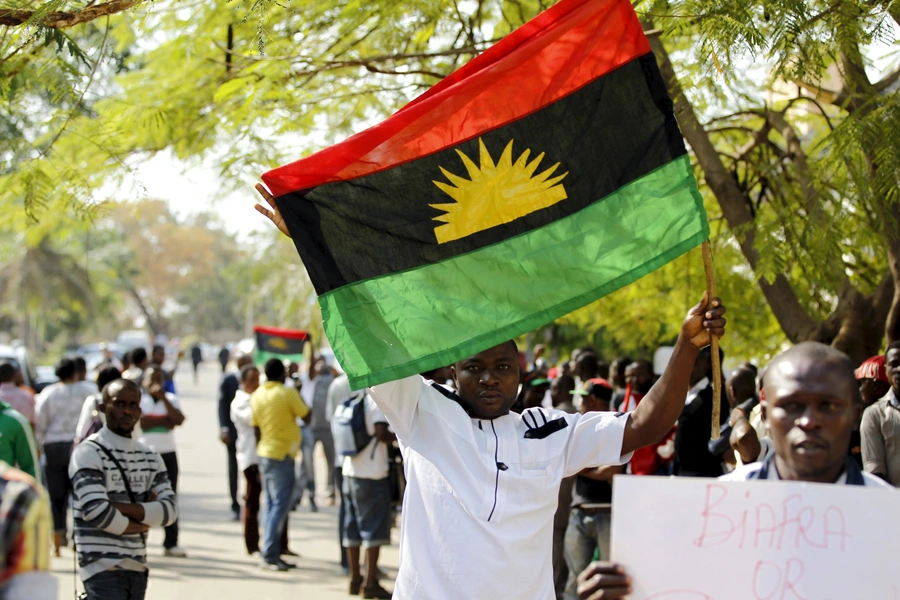
Nigeria has already endured the cost of division. The Biafra war remains a painful reminder of how close the nation came to collapse. Survival came not through foreign experimentation, but through internal resilience and a difficult commitment to unity. Nigerians chose endurance over disintegration.
That lesson remains relevant.
Africans too must remain vigilant. Narratives must be interrogated before they are absorbed.
Who benefits from this framing. Who gains leverage from instability. Who profits from confusion. Wisdom lies in discernment, not reaction.
Nigeria must be allowed to be Nigeria. A sovereign nation with internal challenges and internal solutions. Not a symbol for foreign redemption. Not a stage for legacy building. Not an experiment in controlled chaos.
Africa’s future is too fragile, and too valuable, to be gambled for anyone’s ambition.