
Pakistan has agreed to a weapons sale valued at more than $4 billion to Libya’s eastern-based Libyan National Army (LNA), according to four Pakistani officials familiar with the matter. The agreement, if implemented, would rank among the largest defence export deals in Pakistan’s history and comes despite Libya being under a long-standing United Nations arms embargo.
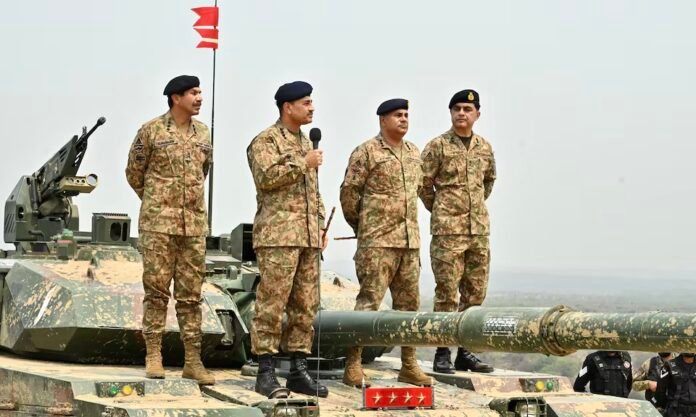
The officials, who requested anonymity due to the sensitivity of the issue, said the deal was finalised following talks last week between Pakistan’s army chief, Field Marshal Asim Munir, and Saddam Khalifa Haftar, deputy commander-in-chief of the LNA, during a visit to Benghazi.
Pakistan’s foreign ministry, defence ministry and military have not publicly commented on the agreement.
What the Agreement Includes
According to a draft version of the agreement reviewed by Reuters before it was finalised, the package includes:
• JF-17 Thunder fighter jets, a multi-role combat aircraft jointly developed by Pakistan and China
• Super Mushak trainer aircraft, used for basic flight instruction
• Additional land, naval and air defence equipment, to be delivered over approximately two and a half years
One official confirmed the aircraft list, while another said final quantities could still change. Two officials put the total value above $4 billion, while the other two estimated it closer to $4.6 billion.
Libya has remained politically fragmented since a NATO-backed uprising in 2011 overthrew longtime ruler Muammar Gaddafi. The country is split between rival administrations:
• The U.N.-recognised Government of National Unity (GNU), led by Prime Minister Abdulhamid Dbeibah, based in Tripoli and controlling much of western Libya
• The Libyan National Army, led by Khalifa Haftar, which dominates eastern and southern regions, including key oil-producing areas, and does not recognise the authority of the western government
The Benghazi-based authorities did not respond to requests for comment.
Confirmation From the LNA
While Pakistani officials spoke privately, the LNA publicly acknowledged closer military ties. Its official media channel announced on Sunday that it had entered into a defence cooperation agreement with Pakistan covering arms sales, joint training and military manufacturing.
“We announce the launch of a new phase of strategic military cooperation with Pakistan,” Haftar said in remarks broadcast by Al-Hadath television, without providing specifics.
Questions Over the U.N. Arms Embargo
Libya has been subject to a U.N. arms embargo since 2011, requiring Security Council approval for any transfer of weapons or military equipment.
A U.N. panel of experts reported in December 2024 that the embargo remained “ineffective,” noting that several foreign states continued to provide military assistance to Libyan factions despite restrictions.
It is not yet clear whether Pakistan or the LNA sought formal exemptions. Three Pakistani officials said the agreement does not violate U.N. rules, arguing that there are no sanctions specifically targeting Haftar or his forces and that other countries have pursued similar arrangements.
Pakistan’s Push to Grow Defence Exports
The Libya deal aligns with Pakistan’s broader strategy to expand arms exports and position itself as a defence supplier to developing and non-aligned states.
Pakistan’s domestic defence industry includes aircraft manufacturing, armoured vehicles, munitions and naval construction. The country has actively promoted the JF-17 as a lower-cost alternative to Western fighter jets, bundled with training and maintenance support.
Speaking on Al-Hadath television, army chief Munir said Pakistan’s recent military confrontation with India earlier this year had showcased its defence capabilities internationally.
Islamabad has also strengthened military cooperation with Gulf states, including a Strategic Mutual Defence Agreement with Saudi Arabia signed in September 2025 and ongoing high-level defence talks with Qatar.
Strategic Implications
If carried out, the Libya agreement would significantly expand Pakistan’s defence footprint in North Africa, a region where global and regional powers are competing for influence amid Libya’s ongoing political instability and oil-driven economy.
The deal is likely to draw international scrutiny, particularly from the United Nations and Western governments, as questions persist over arms flows into Libya and their impact on long-term stability.
Source: Africa Publicity