

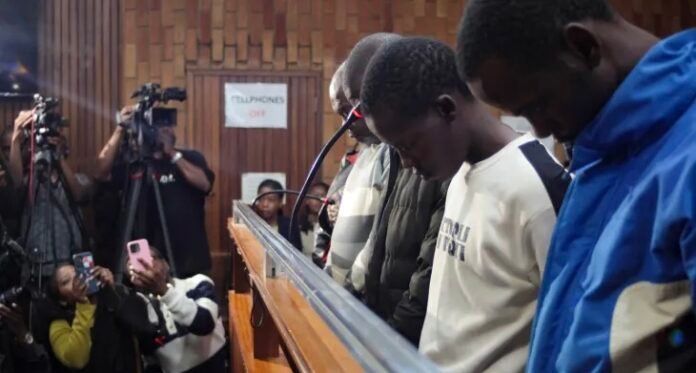
Several South African men say they were deceived into travelling to Russia for what they believed would be private security training, only to find themselves forced into combat roles alongside Russian forces in Ukraine. Families and officials in South Africa describe the situation as life-threatening and legally complex, with diplomatic efforts under way to secure the men’s return.
A Father’s Account
In July, a Durban-based father of three said he felt hopeful when his 20-year-old son accepted an offer he believed would lead to professional bodyguard training in Russia. The opportunity appeared to promise skills development and future employment—an attractive prospect for a family struggling to cover university fees.
Five months later, that optimism has turned into fear. The father told Reuters that his son is now deployed near the front line in eastern Ukraine after falling victim to what he and other families allege was a recruitment scam. At least 17 South African men, aged between 20 and 39, have reported being drawn into the same arrangement.
“I feel responsible,” the father said, explaining that limited financial options made the overseas offer seem legitimate at the time. For safety reasons, Reuters withheld the names of both father and son.
Conditions Near the Front
According to messages and images shared with his family, the young man is stationed in the Donbas region, much of which is under Russian control and has seen intense fighting since Russia’s invasion of Ukraine in February 2022.
The father said his son described long days digging trenches in harsh winter conditions, shortages of food and water, and constant fear of attack. During phone calls, he said, his son sounded distressed and repeatedly asked for help returning home.
Reuters noted it could not independently verify every aspect of these accounts, though the broader context of heavy fighting in Donbas is well documented.
South African Government Response
South African President Cyril Ramaphosa’s office has confirmed that the case is being treated as a priority. Presidential spokesperson Vincent Magwenya said the government is engaged in sensitive discussions with authorities, primarily in Russia, to try to extract the men from the conflict.
“These young men are in serious danger,” Magwenya said at a recent briefing, adding that officials believe they were unlawfully absorbed into Russian military structures.
The Russian foreign ministry did not respond to written questions from Reuters regarding the alleged recruitment scam or the current status of the South Africans.
How the Recruitment Allegedly Worked
South African authorities say the issue came to light on November 6, after distress calls were received from the group in Donbas. According to two recruits interviewed by Reuters by phone, the men arrived in Russia on July 11 and were later presented with contracts written in Russian in the city of Rostov-on-Don.
The men said they were reluctant to sign the documents due to the lack of translation, but were reassured that the contracts related only to security training. Days later, they allege, it became clear they were being deployed to a war zone.
South Africa’s elite police unit, known as the Hawks, is investigating the matter as a potential crime against the state. Under South African law, citizens are prohibited from providing unauthorised military assistance to foreign governments or armed groups.
The investigation has drawn attention because one of former President Jacob Zuma’s daughters, Duduzile Zuma-Sambudla, was named in affidavits related to the case. She has denied any knowledge of a scam and later resigned from her parliamentary seat, saying she too had been misled. The investigation remains ongoing, and no charges have been announced.
Messages and Mounting Fear
One of the recruits, a South African bodyguard and father of three, shared WhatsApp messages with Reuters that he said showed his growing alarm as preparations for deployment began. In the exchanges, he warned that they were being sent to war and that personal belongings, including phones and bank cards, were being taken.
Replies sought to downplay the danger, telling him there was “no stress” and that the men would only be assigned to patrol duties. The recruit told Reuters that reality on the ground was very different, with limited supplies and exposure to active combat operations.
A Wider Pattern Across Africa
South African officials say this case is not isolated. Kenya has reported that more than 200 of its citizens are fighting for Russia in Ukraine, often after being recruited with promises of jobs. Botswana has also said two of its nationals were deceived in a similar way.
Ukraine’s foreign minister stated last month that over 1,400 Africans from more than 30 countries are fighting alongside Russian forces, though Russia does not publish figures on foreign nationals in its ranks.
One Kenyan case highlights the risks involved. A 22-year-old Kenyan man signed a Russian-language contract committing him to military service. After initially reassuring his family, communication stopped. Weeks later, his mother was informed by another fighter that her son had been killed during an explosion at the front.
Kenyan authorities say investigations into such cases are continuing.
For the South African families, the priority remains bringing their relatives home safely. Diplomats face significant hurdles, including access to conflict zones and questions over the legal status of the recruits under Russian military structures.
As investigations continue in South Africa, officials are warning citizens to be extremely cautious about overseas job offers linked to security or military-style training, especially when contracts are unclear or written in unfamiliar languages.
“This situation shows how quickly hope can turn into tragedy,” one family member said. “All we want now is for our children to come back alive.”
Source: Africa Publicity