

By Hassan Solokoh Bockarie
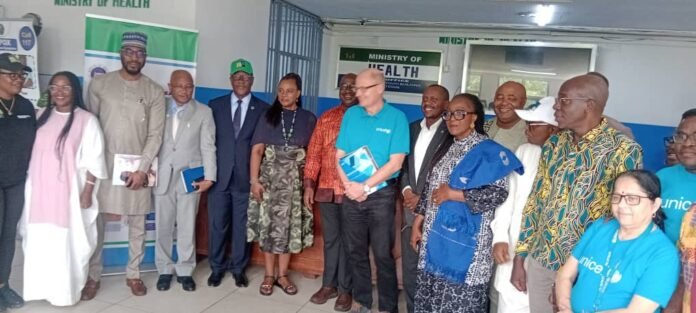
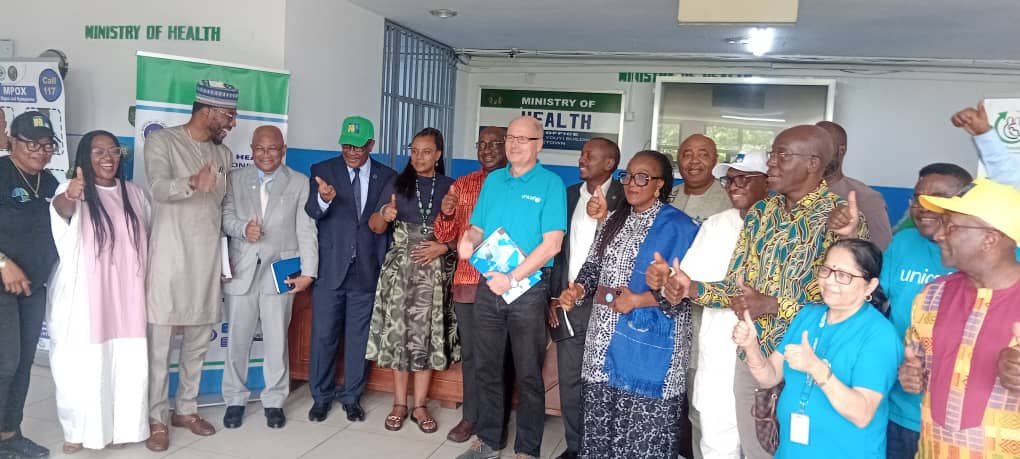
The Government of Sierra Leone, through the Ministry of Health, in collaboration with United Nations agencies, has signed a flagship joint programme aimed at accelerating progress toward Universal Health Coverage (UHC) using a person-centred, life-stage approach, with Moyamba District selected as the pilot area.
The signing ceremony and official engagement took place on 12 December 2025 at the Ministry of Health Conference Room, Youyi Building, marking a major milestone under Pillar 2 of the United Nations Sustainable Development Cooperation Framework (UNSDCF) 2025–2030, which focuses on human capital development and access to essential services.
Delivering welcome remarks, the Senior Permanent Secretary of the Ministry of Health Andrew Sorie described the initiative as timely and transformative, underscoring the importance of strong inter-ministerial and development partner collaboration to ensure successful implementation and sustainable impact.
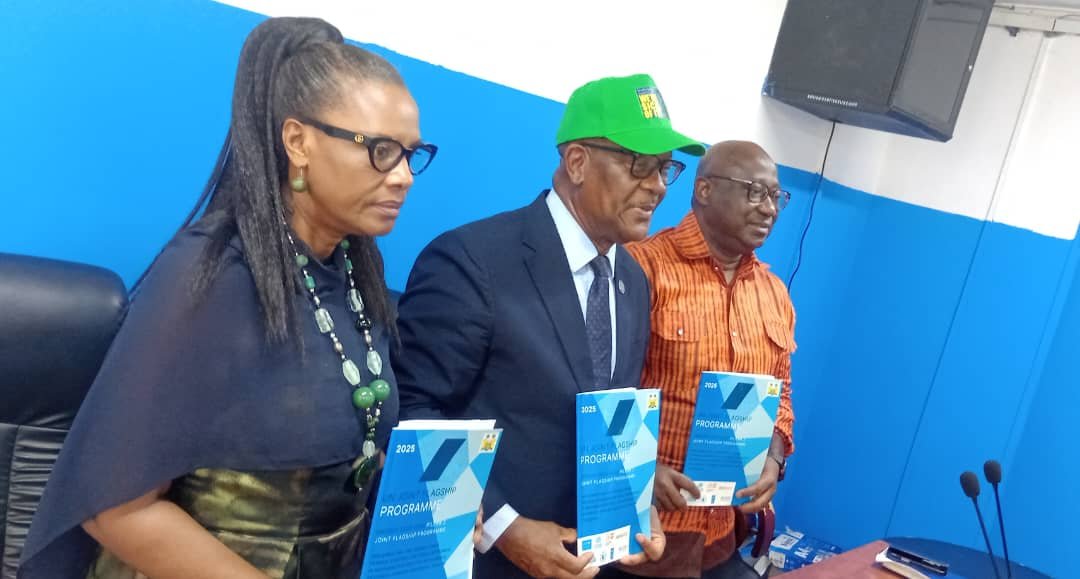
The Chief Medical Officer (CMO), Dr. Sartie Kenneh emphasized that the Ministry of Finance has entered into a strengthened partnership with the Ministry of Health, particularly in advancing pool financing mechanisms to support priority health interventions. He acknowledged the role of the Ministry of Planning and Economic Development (MOPED) as a key development partner and welcomed its active engagement.
The CMO revealed that commitments exceeding 900 million new orders have been secured under the compact, noting that collaboration with the private sector will be critical in mobilizing both public and private contributions. “Our focus is clear: zero maternal deaths, zero child deaths, and zero vaccine-preventable diseases, particularly reaching zero-dose children,” he said.
He further highlighted plans to remodel and redesign human resources for health to respond to the unique needs of different life stages—infants, adolescents, adults, and the elderly, stressing the need for patience, specialized skills, and data-driven leadership. He also referenced the importance of robust health data systems, including the “Delta” data platform, in guiding policy and decision-making, while congratulating partners and the people of Moyamba District.
In his statement, the Deputy Minister of Planning and Economic Development, Rev. Dr. Jonathan Titus-Williams,reaffirmed the government’s commitment to a whole-of-government approach that ensures citizens can access services aligned with their needs. “Access to services that meet the needs of citizens across government institutions is essential. A person-centred, life-stage approach can transform service delivery, restore dignity, and accelerate universal health coverage,” he said.
The Deputy Minister pledged MOPED’s continued guidance and support for the initiative, expressing gratitude to development partners and emphasizing that collective action remains essential to delivering tangible improvements in the lives of families and communities.
Speaking on behalf of the UN system, UN Resident Coordinator Seraphine Wakana said the initiative represents a new way of working together for health and human development in Sierra Leone. She explained that the life-stage approach aligns directly with Pillar 2 of the UNSDCF, focusing on strengthening human capital and essential services.
Ms. Wakana noted that Moyamba District was selected because it reflects the typical challenges faced by rural districts across the country. With a population of approximately 309,000, the district exhibits health indicators below the national average, including a high total fertility rate of 5.4, under-five mortality of 125 per 1,000 live births, and stunting affecting 31.8 percent of children under five. Teenage pregnancy, early marriage, and adolescent childbirth remain significant challenges. “Teenage pregnancy, early marriage, and adolescent childbirth remain major concerns. Although HIV prevalence is relatively low at 0.6 percent, the country has not yet achieved the 95-95-95 targets,” she added.
She explained that since 2023, Sierra Leone has transitioned from disease-specific health models to a person-centred, life-stage approach, which prioritizes holistic well-being across the lifespan. The UN, she said, is supporting the government to operationalize this approach in Moyamba through selected demonstration sites, including Moyamba District Hospital, Moyamba Junction Community Health Centre, Rotawa Community Health Post, and Mokele Mother and Child Health Post. “Our aim is to build an inclusive model in Moyamba that can be adapted and scaled across the country,” she stated.
UNICEF Representative Rudolf Schwenk presented the objectives, expected outputs, and outcomes of the flagship initiative, titled “Person-Centred Life-Stage Approach in Moyamba District to Accelerate Progress Toward Universal Health Coverage.” He linked the programme to Sustainable Development Goal 3 (Good Health and Well-Being), Sierra Leone’s Person-Centred Life-Stage Health Framework (2023–2030), Goal 2 of the Medium-Term National Development Plan, and regional and international commitments.
He noted that the programme’s results chain is designed to reduce morbidity and mortality in Moyamba District while ensuring that no one is left behind.
In his keynote statement, the Minister of Health Dr. Austin Demby,used the occasion of Universal Health Coverage Day to deepen public understanding of UHC, stressing that for Sierra Leone’s population of over 8.5 million, UHC means that every life and every health concern matters.
He explained that the life-stage approach moves the health system away from fragmented, disease-specific care toward holistic, person-centred service delivery. “For pregnant women, care goes beyond delivery. It includes malaria prevention, HIV services, nutrition, and managing conditions like high blood pressure to ensure a safe birth and a healthy baby,” he noted.
This continuum of care, the Minister said, extends to infants through vaccination, nutrition, and disease prevention, ensuring children are healthy and ready for school. “A child suffering from malaria, malnutrition, or diarrhoea cannot learn effectively. Our responsibility is to keep children healthy so they can benefit from education and reach their full potential,” the minister noted.
The approach, the minister concluded, continues through adolescence and adulthood, ensuring that health services evolve with people’s needs and support lifelong well-being.
The Moyamba pilot is expected to generate evidence, best practices, and lessons that will inform the national expansion of the person-centred, life-stage approach—bringing Sierra Leone closer to achieving Universal Health Coverage and improving health outcomes for all.