

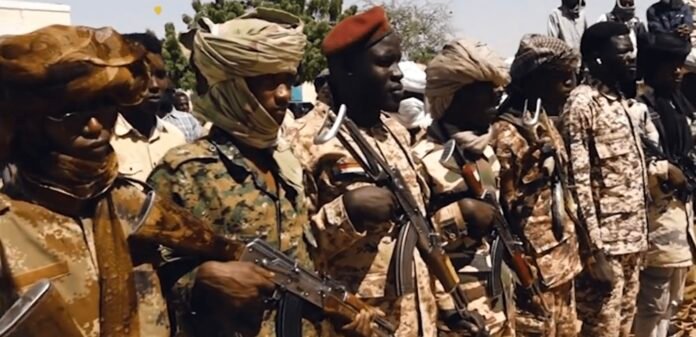
Sudan’s paramilitary Rapid Support Forces (RSF) have claimed control of the Heglig oil field, a key energy and revenue hub, as the country’s ongoing civil conflict continues to destabilize strategic regions. The takeover, announced on Monday, represents the latest development in the months-long struggle between the RSF and Sudanese Armed Forces (SAF), which has increasingly extended into South Kordofan province.
According to reports from regional media and Sudanese authorities, workers and security personnel stationed at Heglig fled across the border into South Sudan following the RSF’s advance. Officials have not provided casualty figures, but the sudden evacuation of oil staff highlights the intensity and urgency of the paramilitary operation.
Strategic Importance of Heglig
Heglig is one of Sudan’s two principal oil-producing areas, alongside Block 6, historically operated by Chinese energy companies since the 1990s. The field has been a focus of conflict due to its economic and geopolitical significance. Control over Heglig not only affects Sudan’s oil production but also impacts South Sudan, which relies on the Heglig facility to process much of its crude oil before export. South Sudan’s oil exports depend on pipelines running through Sudan, as the landlocked country lacks alternative routes to global markets.
The RSF’s capture of Heglig therefore carries both local and regional consequences. Analysts suggest that controlling the facility could provide the RSF with substantial revenue streams, potentially financing further operations against the SAF, while simultaneously limiting Khartoum’s access to critical oil income.
Shifting Dynamics in the Civil War
Since the RSF lost control of Khartoum in the spring of 2025, the paramilitary group has generally been on the defensive. However, recent months have seen a noticeable shift in fighting towards South Kordofan, where SAF forces have struggled to contain RSF advances. The seizure of Heglig underscores the paramilitary’s ability to conduct strategic offensives despite losing ground in the capital.
Conflict in Sudan has roots in long-standing political and military rivalries, with both sides vying for control of key urban centers, infrastructure, and resource-rich areas. The Heglig operation demonstrates the continued fragmentation of authority in Sudan, as paramilitary units assert dominance over economically valuable territories while government forces contend with stretched supply lines and limited operational capacity in peripheral provinces.
Regional Implications
Heglig’s location near the border with South Sudan raises additional concerns for cross-border security. The evacuation of oil personnel into South Sudan may strain relations between the two nations, particularly given South Sudan’s dependence on Sudan’s infrastructure for oil export. Neighboring countries and international stakeholders are closely monitoring the situation, aware that disruptions in Sudanese oil production can affect global markets and regional stability.
Moreover, Chinese and other foreign energy firms with interests in Sudan may face operational disruptions, complicating international investment and humanitarian access in conflict zones. Experts caution that control over resource hubs like Heglig has become a strategic objective for armed groups, not just for revenue but for bargaining power in eventual peace negotiations.
Humanitarian Concerns
Beyond economic and strategic factors, the RSF advance has prompted local displacement. Civilians living near conflict zones, including towns in South Kordofan, face insecurity and potential shortages of essential goods. Humanitarian agencies have highlighted the risk of escalating civilian suffering if fighting continues around oil-producing areas.
The Sudanese civil war, now entering its second year, has already displaced hundreds of thousands, with widespread reports of human rights abuses and infrastructure damage. The latest RSF action at Heglig emphasizes the need for urgent conflict resolution efforts, though prospects for a negotiated settlement remain uncertain.
Next Steps
Authorities have yet to confirm how long the RSF intends to hold Heglig or whether negotiations over control of the oil field will take place. Meanwhile, both Sudanese and South Sudanese officials are monitoring developments closely, aware that energy production and regional stability are tightly intertwined.
Analysts expect Heglig’s capture to influence military strategy, regional diplomacy, and international energy markets, making it a focal point in Sudan’s volatile civil war landscape.
Source:Africa Publicity