

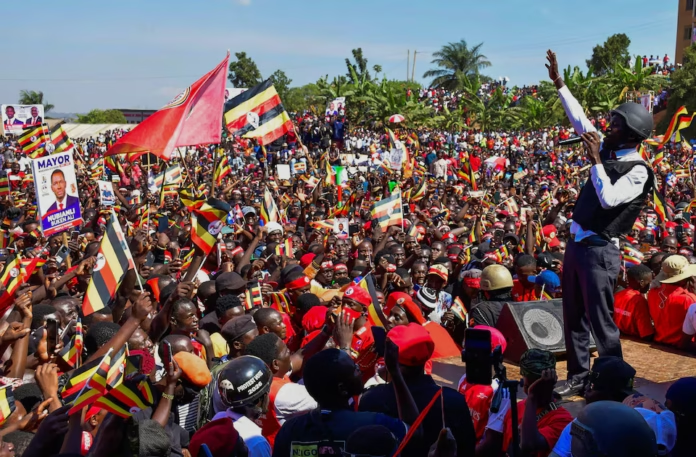
Uganda’s national police service has announced an investigation into reports that security forces assaulted opposition supporters and the presidential candidate Bobi Wine during a campaign rally in the northern city of Gulu. The announcement comes amid growing tensions ahead of the country’s national election scheduled for January 15, 2026.
Bobi Wine, 43, whose real name is Robert Kyagulanyi, claimed over the weekend on social media platform X that he was struck in the face with a cane by police officers at the rally. He also said that several of his supporters required hospital treatment after being beaten. Wine, a former pop musician turned politician, is widely regarded as the main challenger to 81-year-old incumbent President Yoweri Museveni.
In a statement posted on its official website on Monday, the Uganda Police Force acknowledged reports of officers using canes against civilians during the Gulu event. “These actions are regrettable, undesirable, and unfortunate,” the statement read. “Any actions found to be inconsistent with agreed standards of behaviour will be investigated, and appropriate action should be taken against any officer found responsible.”
The police assurance comes as Uganda faces heightened scrutiny over its handling of opposition figures and political rallies. Wine’s party, the National Unity Platform (NUP), has repeatedly accused Museveni’s government of systematically detaining, torturing, and intimidating party members and supporters ahead of national elections. The government, however, denies these claims, maintaining that security operations are conducted only against individuals suspected of committing criminal offences.
Rising Tensions Ahead of January Poll
The upcoming election has intensified political divisions in Uganda, where Museveni has held power for nearly four decades. Wine’s emergence as a popular opposition figure has mobilized large youth and urban constituencies, challenging the longstanding dominance of the ruling party, the National Resistance Movement (NRM).
Observers note that campaign rallies in Uganda have increasingly become flashpoints for confrontations between security forces and opposition supporters. In previous election cycles, reports of arrests, beatings, and intimidation have drawn criticism from local and international human rights organizations. The government contends that these measures are necessary to maintain public order during political gatherings.
At Monday’s press briefing, the Electoral Commission of Uganda urged police to investigate the reported “confrontations” at the Gulu rally and to exercise restraint at future political events. Commission officials emphasized the importance of ensuring a safe environment for voters and candidates alike.
Background on Bobi Wine and Political Challenges
Bobi Wine rose to national prominence first as a musician and later as a parliamentarian. He has consistently advocated for youth participation in politics, government accountability, and anti-corruption measures. His activism has frequently brought him into conflict with authorities, leading to multiple arrests and alleged harassment by state security forces.
Analysts suggest that the reported incident in Gulu underscores the volatile political climate in Uganda as the country approaches the January vote. “This is a critical period for Uganda,” said political analyst Sarah Kagoro. “Any perceived targeting of opposition figures can further polarize the electorate and impact the credibility of the electoral process.”
Calls for Transparency and Accountability
Human rights organizations have also weighed in, calling on Ugandan authorities to ensure independent and transparent investigations. The Uganda Human Rights Commission and several civil society groups have urged that any findings be made public and that officials responsible for excessive use of force face accountability.
Meanwhile, supporters of Wine have continued to campaign across northern and eastern Uganda, emphasizing voter engagement and mobilization, despite concerns over security and safety. The police investigation is expected to include interviews with eyewitnesses, medical reports from hospitals treating injured supporters, and a review of video evidence from the rally.
As Uganda prepares for a high-stakes election, the government’s handling of political rallies and opposition activity will remain closely monitored by both domestic observers and the international community.
Source:Africa Publicity