
By Alpha Amadu Jalloh
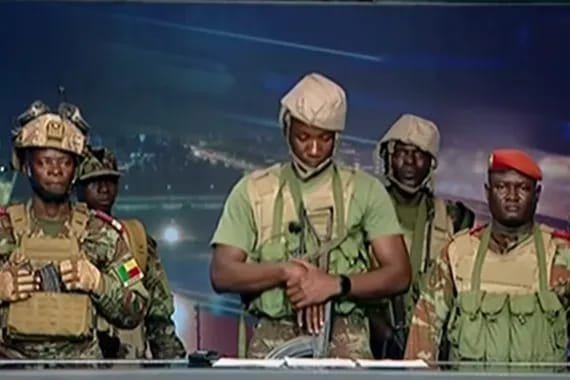
The morning of 7 December 2025 brought yet another unsettling reminder of West Africa’s fragile democratic landscape. In Cotonou, the economic and administrative heart of Benin Republic, a group of soldiers announced on state television that they had seized power. They claimed to have removed President Patrice Talon, suspended the constitution, dissolved all institutions and installed a new military-led governing body they called the Military Committee for Refoundation. For a tense period, the nation found itself watching the familiar choreography of military takeover unfold once more.
Although the attempted coup was later declared unsuccessful by loyal government forces, the mere fact that such an event unfolded is deeply troubling. West Africa is experiencing a pattern, not isolated incidents. This attempted takeover in Benin joins a long line of coups and mutinies that have shaken the region in recent years. From Mali to Burkina Faso, from Guinea to Niger, and from Guinea Bissau to now Benin, the same story continues to replay itself: fragile democracy, weakened institutions, power manipulation by leaders, and growing military impatience.
The continent continues to announce its commitment to democratic values, yet democratic practice remains shallow and inconsistent. Institutions exist only in form but not in function. Constitutions remain vulnerable to manipulation. Leaders bend rules for personal continuity. And militaries, watching these developments, step in under the pretext of rescuing the state from civilian failure. That is the cycle. That is the disease.
The grievances expressed by the Benin mutineers resonate across many African states. Soldiers complained of deteriorating security, neglect of military welfare, unfair promotions, and widening societal hardship. They pointed to insecurity in the northern region, poor handling of fallen soldiers, inadequate compensation, and institutional fatigue. These are not unique to Benin. They are symptoms of systemic decay visible across the region.
African citizens continue to live through the same political patterns. Civilian leaders manipulate the rules to entrench power. Institutions turn into instruments of personal protection. Constitutions become playthings. And when the public loses trust, the military interprets the vacuum as an opportunity to correct the so called national dysfunction.
It is here that Africa’s regional and international institutions must also be held accountable. ECOWAS, the African Union, and the United Nations have lost credibility in the eyes of citizens, scholars and even military officers. Their responses to crises have become predictable and ineffective. Whenever a coup occurs, these bodies release statements, condemn the act, express deep concern and pledge support for constitutional order. And then everything fizzles. Nothing follows.
It is no wonder that many Francophone West African countries now openly refer to ECOWAS as zero and the African Union as a toothless bulldog. They see organisations that talk loudly but act weakly. They see organisations that preach democracy while tolerating constitutional manipulation by so called democratic leaders. They see organisations that threaten sanctions against military regimes yet hesitate to confront civilian governments that violate basic democratic norms. These contradictions have corroded their legitimacy.
The United Nations, for its part, remains distant, bureaucratic and slow. It affirms principles yet rarely enforces them. The result is a vacuum in which military actors increasingly feel emboldened and civilian leaders continue to abuse their mandates without fear of consequence. Both sides read the inaction and inconsistency of these institutions as weakness.
This leads us to the core problem fueling coups in Africa. Coups rarely emerge out of nowhere. They are often triggered by the failures of those who claim democratic legitimacy. In many cases, constitutional rule is subverted long before a military officer appears on television. Leaders amend constitutions to extend their terms. They weaken parliaments. They manipulate electoral processes. They centralise power. They intimidate opponents. And once legitimacy collapses, the armed forces believe they are justified in stepping in and resetting the system.
In the Benin case, there have been strong political analyses suggesting that President Patrice Talon was preparing to implement what analysts call the Putin Medvedev strategy. In this model, Talon would step aside after his term, install a loyal ceremonial president, continue controlling the state from behind the scenes and then eventually return for another two terms. Such intentions, if true, would mirror a broader trend in Africa where leaders tamper with constitutions to remain relevant indefinitely.
This is the same justification used in Guinea Conakry, Guinea Bissau and elsewhere. When a leader breaches constitutional limits, the military steps in claiming to restore constitutional purity, even though the military itself becomes unconstitutional in the process. It is a tragic irony, but one that has become normalised in African politics.
What makes Africa’s situation even more concerning is that this pattern now travels swiftly across borders. A coup in one country encourages another in a neighbouring state. A leadership manipulation in one state sends signals to another. And soldiers elsewhere watch closely. They see how military juntas are tolerated. They see how foreign powers adjust quickly. They see how regional bodies issue statements and move on. The message becomes clear. If stability is absent and institutions are weak, power becomes fluid.
This moment calls for deep reflection. Africa cannot continue to repeat these cycles. We must return to the moral and intellectual foundations of leadership that our earlier leaders once tried to articulate. One of Africa’s most respected voices, President Julius Nyerere of Tanzania, reminded us of the values rooted in our tradition.
│ “We in Africa have no more need of being converted to democracy than we have of being taught it. Democracy is rooted in our past.”
Nyerere understood that democracy is not foreign. It is an African heritage that must be protected, not manipulated. It is participation, not domination. It is leadership with humility, not leadership with greed.
Another African statesman, President Ahmed Tejan Kabbah of Sierra Leone, spoke words that must echo today.
│ “Never again shall we resort to violence to settle matters of political importance.”
Yet here we are again. The promise of nonviolence is broken not only by soldiers but also by leaders who violate their own constitutions. Violence does not always begin with guns or bombs. It begins with the violence of lawlessness. It begins with the violence of institutional manipulation. It begins with the violence of disregarding the will of the people.
Where next? That is the question on the minds of many Africans today. If institutions remain weak, if ECOWAS continues to shrink in relevance, if the African Union continues to bark without teeth, if the United Nations continues to remain a distant observer, then more coups will follow. As long as leaders continue to break their constitutions, the military will continue to use those breaches as justification for intervention. Other African states must worry. Some are only one political miscalculation away from instability.
But change is possible. Stability is possible. And democratic renewal is possible. It requires courage from citizens, integrity from leaders, and reforms within institutions. Press releases are not enough. Statements of concern are not enough. Africa needs enforcement, consistency and honesty.
The attempted coup in Benin is a warning sign. A reminder. A call to action. Without reform, West Africa will continue to move in circles. Our people deserve better than recycled crises. They deserve institutions that work, leaders who respect the constitution and regional bodies that enforce principles.
Africa must decide whether it will continue to repeat its old mistakes or rise to meet the demands of a new era. The choice is ours.