

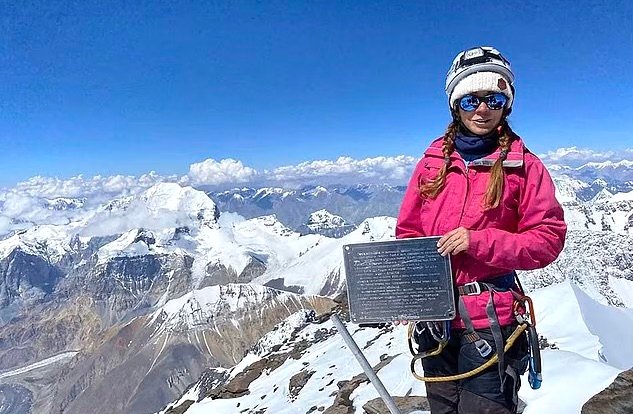
Authorities in Austria have formally charged an experienced mountaineer with manslaughter following the death of his girlfriend on Grossglockner, the country’s highest mountain. The woman, a 33-year-old from Salzburg, lost her life during a high-altitude climb in January after reportedly being left alone in freezing conditions near the summit.
The couple had set out on the challenging ascent of the 12,460-foot mountain in winter, a time when conditions are known to be particularly dangerous due to extreme cold, high winds, and rapidly changing weather. According to investigators, the journey began later than initially planned, a decision that would later be cited as one of several critical errors in judgment.
As they approached the summit — reportedly just 50 metres away — the woman began to struggle physically. She was unable to continue, showing signs of exhaustion and distress. Instead of turning back together or seeking immediate assistance, the man allegedly left her where she was and descended alone in search of help. Investigators say she remained on the mountain for approximately six and a half hours before dying from exposure.
Following an extensive investigation involving forensic analysis, mobile phone records, sports watch data, video footage, and expert assessments by alpine specialists, Austrian prosecutors concluded that the man had made a series of negligent decisions that ultimately contributed to her death.
The public prosecutor’s office stated that the man, who had significantly more experience with advanced alpine routes than his girlfriend, should have acted as the responsible leader or guide of the climb. He was therefore expected to consider her limited experience and adjust the plans accordingly.
Officials determined that the woman had never attempted such a demanding high-altitude climb before and was ill-equipped for the terrain. In addition to inexperience, she was using a splitboard and soft snow boots — equipment that experts deem unsuitable for a winter ascent in mixed alpine conditions. This further increased her vulnerability as conditions worsened.
Authorities also pointed to the fact that the man did not take sufficient emergency supplies. He is accused of failing to carry vital survival equipment such as a bivouac sack or thermal emergency blankets, both of which are standard safety precautions for alpine expeditions, especially in winter.
Weather conditions on the night of the incident were severe. Wind speeds reportedly reached up to 46 miles per hour, and temperatures fell to minus eight degrees Celsius. When factoring in wind chill, the conditions felt closer to minus 20 degrees. Under such circumstances, experts say that an earlier decision to turn back would have been crucial in preventing danger.
Another significant point in the investigation was communication. Despite the seriousness of the situation, the man reportedly did not contact emergency services before nightfall. There were also concerns that when a police helicopter searched the area around 10:50pm, he failed to send any visible or audible distress signals.
Attempts by the Alpine Police to reach him went unanswered for hours. When contact was eventually made around 12:35am, the details of the conversation remain unclear. After that call, he reportedly silenced his phone and did not respond to further attempts to communicate with rescue officials.
It was not until 3:30am that he finally alerted rescue services — long after he had left his girlfriend behind. By that time, strong winds prevented an immediate helicopter rescue. Mountain rescue teams were only able to reach the location later the following morning. Sadly, when they arrived, the woman was found deceased.
The man, aged 39 according to Austrian media, now faces a charge of manslaughter by gross negligence, an offence that carries a possible sentence of up to three years in prison. His lawyer, Kurt Jelinek, stated that his client is deeply remorseful over what happened but maintains that it was a tragic accident rather than a deliberate act or reckless intent.
The case has drawn renewed attention to the importance of preparation, responsibility, and safety in high-altitude climbing. Professional climbers and safety experts have used the incident as a reminder that in alpine conditions, poor planning and delayed responses can quickly turn fatal.
The accused is scheduled to stand trial on February 19, 2026, at the Innsbruck Regional Court, where a judge will assess whether his actions meet the legal standard for gross negligence.
This tragic incident follows other recent high-altitude emergencies worldwide, including that of Russian climber Natalia Nagovitsyna, who was presumed dead last August after becoming stranded on Victory Peak in Kyrgyzstan. Despite multiple rescue attempts and the use of thermal-imaging drones, no signs of life were detected after she had spent more than two weeks trapped near the summit in extremely harsh conditions.
Both cases highlight the immense risks of high-altitude climbing and the critical importance of safety awareness, preparation, communication, and sound decision-making when facing extreme environments.
Source:Africa Publicity