

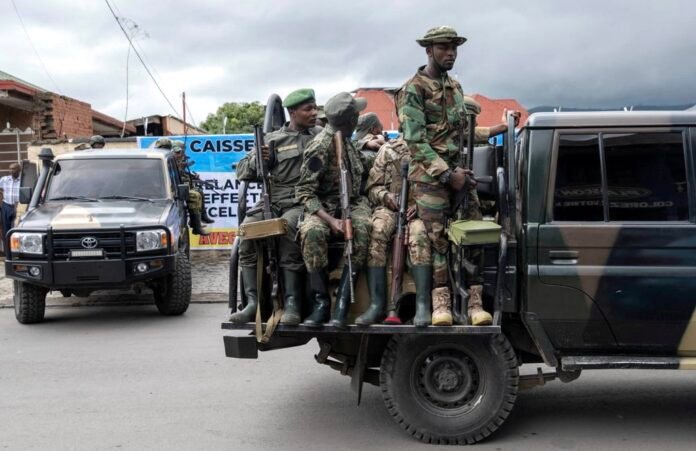
Tensions have risen again in eastern Democratic Republic of Congo (DRC) after the national army and Rwanda-backed rebels accused one another of breaking a fragile ceasefire agreement. Fresh violence reported in South Kivu province this week has cast doubt on ongoing international efforts to restore stability to the region and prevent a wider war.
According to the Armed Forces of the Democratic Republic of Congo (FARDC), government troops were attacked in the communities of Kaziba, Katogota, and Lubarika. Military officials claim the assaults were carried out by fighters from the M23 rebel group and its allied forces. The army described the incidents as a clear violation of peace commitments made during negotiations in Washington and Doha.
“These attacks clearly show the coalition’s determination to sabotage the Washington and Doha peace agreements,” said Major General Sylvain Ekenge, the army’s spokesperson. He stated that Congo’s security forces had previously exercised restraint to support the peace process but could no longer ignore what they described as repeated provocations.
The M23 rebel group and its partners quickly rejected the government’s claims. Corneille Nangaa, who leads a broader rebel alliance that includes M23, said that Congolese forces, alongside soldiers from Burundi and other allied groups, were actually responsible for launching the first attacks in the area. In a statement shared on X (formerly Twitter), Nangaa insisted that the rebel alliance had been forced into a defensive position.
“Faced with this violation of the ceasefire within the framework of the Doha peace process, the alliance has no choice but to defend itself and protect civilian populations,” he said. The M23 president and the alliance’s main spokesperson issued similar messages, each denying responsibility for initiating violence and placing the blame squarely on the Congolese government and its regional partners.
Eastern Congo has suffered years of unrest caused by the presence of armed groups, ethnic tensions, and struggles over the control of mineral-rich land. The M23 movement, largely made up of ethnic Tutsi fighters, re-emerged as a serious threat after launching a rapid military offensive earlier this year. During that campaign, the group managed to seize two of eastern Congo’s largest cities, sending shockwaves through the country and displacing thousands of civilians from their homes.
The Congolese government has long accused neighboring Rwanda of supporting the M23 rebels with weapons, training, and logistical support. Rwanda has repeatedly denied those allegations, insisting it is not involved in the conflict. However, reports by the United Nations and other international observers have raised concerns that Rwanda may be providing backing to the group, further straining diplomatic relations between Kigali and Kinshasa.
In response to growing instability, the international community has renewed diplomatic efforts to bring both sides back to the negotiating table. U.S. President Donald Trump is expected to host the presidents of the Democratic Republic of Congo and Rwanda at a high-level meeting later this week. The leaders are scheduled to sign a peace agreement intended to halt hostilities and establish a pathway toward lasting stability in the conflict-ridden region.
Despite this diplomatic progress, the latest fighting threatens to undermine these efforts. Analysts warn that peace agreements will have very little effect if violence continues on the ground. They say both parties must demonstrate genuine commitment by ordering their forces to stand down and allowing independent monitors to verify compliance with the ceasefire.
Meanwhile, the humanitarian situation in South Kivu and surrounding areas continues to worsen. Thousands of people have fled their homes in fear of further clashes, seeking refuge in overburdened displacement camps or neighboring communities. Aid organizations report an increasing need for food, clean water, medical supplies, and protection, especially for women and children who are most vulnerable during periods of conflict.
Local residents have expressed frustration and despair over the repeated breakdown of peace efforts. Many say they have heard promises of stability before, only for fighting to resume weeks or even days later. For ordinary citizens, the ongoing power struggle between armed groups and political leaders has resulted in years of insecurity, poverty, and disrupted education.
Even so, some observers remain cautiously hopeful that continuous international involvement might help prevent complete collapse. They argue that sustained diplomatic pressure, combined with meaningful reforms within the DRC and genuine cooperation from neighboring countries, could still pave the way for lasting peace.
For now, however, the situation remains tense and unpredictable. As both sides continue to exchange accusations and reinforce their positions, the coming days will be critical in determining whether the region moves toward peace or slides deeper into conflict.
Source:Africa Publicity