

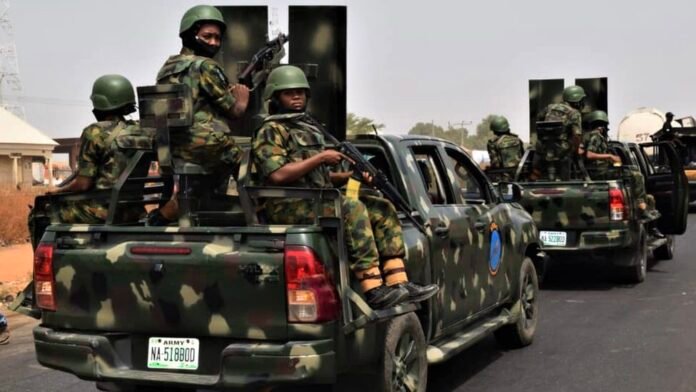
On 29 November 2025 at around 1500 hours local time, a convoy comprising four gun trucks and a Toyota-SUV carrying Nigerian military officers entered Mazanya, the DHQ confirmed. Their alleged purpose: to fetch water from a source accessible across the border — a practice that, according to DHQ, has been standard procedure for troops from the Niger Republic.
On the day of the incident, the Nigerien military team reportedly arrived in a larger convoy than usual. It was made up of several gun trucks and a utility vehicle carrying senior officers. This unusual number of vehicles and personnel alarmed local residents and members of a vigilante group who were monitoring movement around the area. Without any prior notice or official communication to Nigerian authorities or community leaders, the arrival of the armed convoy was interpreted as a serious threat.
In response, some members of the vigilante group opened fire, believing they were defending their community against an invasion. The situation could have escalated into a much more violent confrontation if not for the swift intervention of the Nigerian Army and other security agencies who were alerted to the unusual activity at the border. Upon arrival, Nigerian military officers intervened, established communication with the Nigerien troops, and quickly de-escalated the situation.
After discussions between both sides, it became clear that the misunderstanding was rooted in a lack of communication and coordination. The Nigerien commander reportedly explained that the large convoy was the result of a temporary change in leadership and scheduling and not an attempt to intimidate or provoke the Nigerian side. Once the situation had been resolved, the Nigerien soldiers were allowed to collect water and return to their country peacefully under the supervision of Nigerian security officials.
The Defence Headquarters emphasized that while the act of crossing the border to fetch water had been an established and informal practice for years, it should have been properly coordinated, especially given the current security situation in the region. Nigeria’s northern borders, particularly in Katsina State, have faced repeated threats from banditry, terrorism, arms smuggling, and illegal migration. As a result, communities and security groups have remained on high alert, making any unusual movement a cause for concern.
Following the incident, the DHQ convened an emergency joint security meeting involving representatives from both Nigeria and Niger. The purpose of the meeting was to strengthen cross-border communication and prevent similar misunderstandings in the future. During the discussions, both sides agreed on the need for clear protocols, including advance notification whenever foreign military personnel intend to enter any part of Nigerian territory, even for non-combat reasons such as collecting water.
In addition, Nigerian authorities promised to improve awareness among border communities to help them better understand legitimate, approved cross-border activities. The DHQ also advised local vigilante groups to exercise caution and seek confirmation from official security channels before engaging in any form of armed response in future situations.
This incident highlights the delicate balance required in border areas where communities from different countries interact closely due to shared history, culture, and natural resources. Nigeria and Niger share hundreds of kilometers of border, with many families, traders, and farmers crossing daily as part of normal social and economic life. While this relationship has generally been peaceful, the presence of armed groups and insecurity in the wider Sahel region has made border management more challenging.
Security analysts say the event serves as an important reminder of the dangers that can arise from poor coordination and the importance of transparency between neighboring countries. Even an activity as simple as collecting water can lead to panic, injuries, or diplomatic tension when it involves armed personnel and occurs in an environment of fear and uncertainty.
The DHQ reassured Nigerians that the nation’s territorial integrity was never compromised and that the armed forces remain fully alert and capable of responding to any real threat. At the same time, it reaffirmed Nigeria’s commitment to peaceful relations with the Republic of Niger and to continued cooperation in tackling shared regional challenges such as terrorism, banditry, and climate-related resource shortages.
For the residents of Mazanya and other border communities, normal life has since returned, although the incident has left behind an important lesson about the power of communication and the consequences of misunderstanding. Moving forward, both countries hope that improved dialogue and cooperation will prevent a repeat of such a frightening situation.
Source:Africa Publicity