

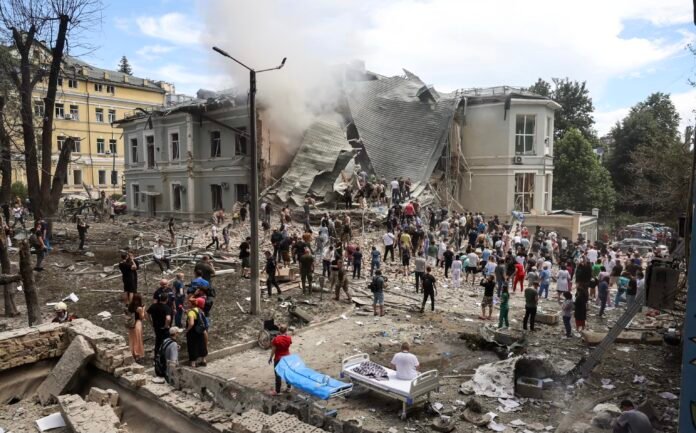
A Russian missile attack struck the eastern-central Ukrainian city of Dnipro on Monday, killing four people and injuring at least 40 others, according to Ukrainian officials. The incident once again highlighted the ongoing dangers faced by civilians living in areas frequently targeted during the nearly four-year war between Russia and Ukraine.
Authorities in the Dnipropetrovsk region confirmed that among those injured, 11 people were in serious condition. Emergency response teams rushed to the scene shortly after the blast, working to rescue survivors, provide first aid, and clear debris from damaged buildings. By evening, officials announced that the search and rescue operation had been completed, but the emotional and physical toll on the affected community remained significant.
The strike caused extensive damage to civilian infrastructure. Ukraine’s emergency services reported that several car service stations, small businesses, an office building, and at least 49 vehicles were damaged or destroyed as a result of the explosion. Debris littered the streets, windows were shattered, and several structures suffered partial collapse. For many residents and business owners, the damage represented another devastating setback after months of instability.
One local worker, Vitalii Kovalenko, was inside his car repair workshop when the missile hit nearby. He described the moment as terrifying, saying that everyone in the building dropped to the floor as the shockwave moved through the structure. After the initial impact, he and others began calling out to check if everyone was safe. He later found a coworker slightly injured by flying fragments, but, fortunately, all of his employees survived the attack. His experience reflects the narrow escapes that many residents of Dnipro face during frequent air strikes.
Images and video footage shared on the Telegram messaging app showed firefighters extinguishing flames, emergency crews carrying injured individuals on stretchers, and heavily damaged vehicles scattered around the impact area. These images offered a stark reminder of the daily threats faced by civilians in Ukrainian cities near the frontlines or within range of long-distance missile attacks.
Dnipro has been a regular target since the war began due to its strategic location and industrial importance. The city plays an essential role in manufacturing, transport, and logistics, which makes it vulnerable during periods of intensified conflict. Russian missile and drone attacks on the region have previously struck residential neighborhoods, energy facilities, and industrial sites, disrupting daily life and leaving thousands without power, water, or shelter at various times over the past years.
The latest strike came at a sensitive moment in international diplomacy. At the time of the attack, Ukrainian President Volodymyr Zelenskiy was in Paris, participating in high-level discussions with European leaders as part of renewed efforts to bring the prolonged conflict to an end. Only a day earlier, members of his team had also held talks with United States officials, aiming to strengthen military support and explore possible pathways toward peace.
While no immediate statement was released by Russian officials regarding the Dnipro attack, similar incidents in the past have often been linked to ongoing military operations aimed at weakening Ukraine’s infrastructure and reducing its capacity to sustain resistance. Ukraine has repeatedly condemned such strikes as deliberate attacks on civilians and non-military targets, describing them as violations of international humanitarian law.
Residents of Dnipro, however, remain determined despite the ongoing danger. Many local volunteers assisted emergency services by offering food, water, and temporary shelter to those displaced by the attack. Hospitals in the region also issued urgent calls for blood donations, and hundreds of citizens reportedly responded within hours. This sense of unity and resilience has become a defining characteristic of Ukrainian communities since the war began.
Analysts observing the situation warn that, despite diplomatic efforts, violence is likely to continue in the short term. They stress that although negotiations and discussions are important, they often take time and do not always immediately translate into reduced military activity on the ground. As a result, ordinary people in cities like Dnipro continue to pay the highest price while political leaders seek solutions.
The international community has once again expressed concern over the rising number of civilian casualties in Ukraine. Human rights organizations and foreign governments have urged all sides to protect non-combatants and respect international laws of war. They have also renewed calls for humanitarian aid and reconstruction support, especially for cities that have suffered repeated attacks.
For now, Dnipro begins the difficult process of recovery. Damaged buildings will need to be repaired, businesses rebuilt, and families helped to cope with loss and trauma. Yet for many residents, the question remains not only how to rebuild, but also how long the cycle of destruction will continue.
Source:Africa Publicity
Read Also…
UK Pulls Financial Support for Mozambique LNG Project Over Rising Security and Risk Concerns
Dangote Refinery Challenges Regulator’s Figures, Says It Can Meet Most of Nigeria’s Petrol Demand