

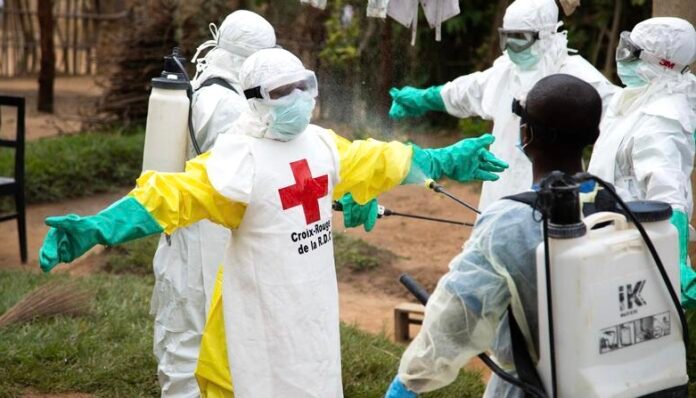
Health authorities in the Democratic Republic of Congo (DRC), along with the World Health Organization (WHO), have officially confirmed that the country’s most recent Ebola outbreak has come to an end. This decision was made after 42 consecutive days passed without any new cases being reported, which meets the international requirement for declaring an outbreak over. The news marks a significant milestone in the country’s ongoing battle against a deadly virus that has affected multiple regions over the past several decades.
The outbreak was first declared on September 4 in the Bulape health zone, located in Kasai Province. At the time, health officials discovered several cases displaying symptoms consistent with Ebola, prompting immediate concern and emergency action. This was the first time the virus had been detected in the country since 2022, raising fears of a possible widespread outbreak similar to those experienced in the past.
Throughout the course of this most recent outbreak, a total of 64 people were confirmed to have contracted the virus. Sadly, 45 of those individuals lost their lives, while 19 others recovered after receiving treatment in specialized isolation facilities. These figures were released by the Congolese Ministry of Health, which worked closely with international partners to monitor and control the situation.
A major factor in successfully containing the virus was the country’s upgraded disease surveillance system. Since earlier outbreaks, the DRC has invested in improving its ability to detect and respond to infectious diseases. Using advanced mapping, contact tracing, and rapid reporting technologies, health authorities were able to quickly identify affected areas and limit the spread of the virus to nearby communities. This early response helped prevent the outbreak from expanding into a larger national emergency.
Medical professionals, volunteers, and humanitarian workers played an essential role in the response effort. Teams were dispatched to affected regions to provide medical care, distribute protective equipment, and educate the public on safety practices. Community members were urged to report symptoms early, avoid direct contact with bodily fluids, and practice frequent handwashing. These combined efforts significantly lowered the chances of further transmission.
Dr. Mohamed Janabi, the WHO Regional Director for Africa, praised the response of both local and international teams. He described the successful containment of the outbreak within three months as a notable achievement, especially in a region that often faces challenges such as limited infrastructure, difficult terrain, and insufficient medical resources.
The final recorded case occurred on September 25, and the last patient undergoing treatment was discharged on October 19 after testing negative for the virus. According to WHO guidelines, an Ebola outbreak can only be declared over after two full incubation periods — each lasting 21 days — pass without new infections being identified. With this condition now met, officials have been able to confirm that the threat from this particular outbreak has ended.
Despite this progress, authorities are taking further precautionary measures. The DRC is now entering a 90-day period of enhanced monitoring. During this time, healthcare workers will continue to observe communities, test suspected cases, and remain on high alert for any unusual symptoms. This step is necessary because Ebola can occasionally resurface even after an outbreak is declared over.
This latest incident marks the 16th Ebola outbreak in the Democratic Republic of Congo since the virus was first discovered in 1976. The country’s dense tropical rainforests provide an environment where the virus can exist in animal species such as bats and primates, making occasional transmission to humans possible. For this reason, health experts acknowledge that future outbreaks cannot be completely ruled out.
Ebola is transmitted through direct contact with the bodily fluids of an infected person or animal. Common symptoms include fever, severe weakness, muscle pain, and gastrointestinal problems. Although it is a dangerous disease, improvements in treatment, faster diagnosis, and vaccination strategies have significantly increased survival rates when patients receive care early.
In recent years, the DRC has strengthened its overall health response system by training more healthcare workers, improving emergency preparation plans, and increasing cooperation with international partners. These advancements have improved the country’s ability to quickly control and manage outbreaks before they spiral out of control.
As restrictions in the affected areas begin to ease, communities are slowly returning to normal life. Markets are reopening, schools are welcoming students again, and families are working to rebuild both emotionally and financially after the difficult months. While the end of the outbreak is being welcomed with relief, health experts continue to stress the importance of constant preparedness, public education, and investment in healthcare systems.
Source:Africa Publicity