

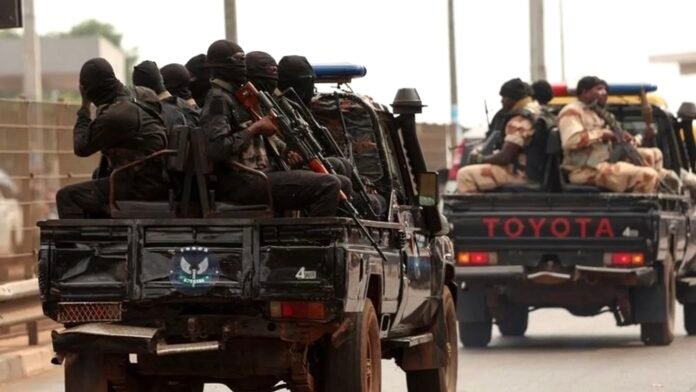
Guinea-Bissau has once again found itself at the center of political uncertainty after the country’s military leadership imposed a sweeping ban on public demonstrations and labor strikes, a move that signals increasing control over civic space as a high-profile delegation from the Economic Community of West African States (ECOWAS) prepares to arrive in the capital, Bissau. The decision comes in the aftermath of last week’s military takeover, an act that has drawn sharp criticism from several regional leaders and raised fresh concerns about the stability of democracy in the West African nation.
Late Sunday evening, the military authorities issued a formal announcement prohibiting all forms of public protest, work stoppages, and any other activities they believe might threaten what they described as “peace and stability.” In the same directive, they ordered all government offices, ministries, and state institutions to reopen and return to normal operations immediately. According to the military leadership, this measure is intended to restore order following days of uncertainty, rumors, and unrest after the coup.
The ban followed demonstrations held in Bissau on Saturday, when hundreds of people—many of them young citizens—gathered in the streets to demand the release of detained opposition figures and the public disclosure of the presidential election results. Witnesses reported that the protesters chanted for transparency and the return of constitutional rule. Although the demonstrations were largely peaceful, the military government labeled them a threat to national security and moved quickly to suppress further gatherings.
Meanwhile, a high-level ECOWAS mediation team was scheduled to arrive in Guinea-Bissau at the start of the week. The delegation is expected to include the presidents of Togo, Cape Verde, and Senegal, along with the president of the ECOWAS Commission. Their mission is to engage directly with the military leaders in an effort to reverse the unconstitutional change of government and chart a path back to democratic governance. ECOWAS has long maintained a zero-tolerance policy toward coups in the region, and the organization has made it clear that failure to restore constitutional order could result in diplomatic and economic sanctions.
In recent statements, ECOWAS officials warned that individuals or groups found to be responsible for undermining the country’s democratic process could face targeted sanctions, including travel bans and asset freezes. The regional bloc has used similar measures in the past in countries such as Mali, Burkina Faso, and Guinea following military takeovers. For Guinea-Bissau, which already faces significant economic challenges and political instability, such sanctions could further strain the nation’s fragile institutions.
Major-General Horta Inta-a, who was installed as interim president following the military’s seizure of power, defended the takeover by claiming it was necessary to prevent an alleged plot by drug traffickers to take control of the state. He accused “narcotraffickers” of attempting to manipulate the political system and undermine national sovereignty. According to him, the military acted to protect the country’s democracy rather than destroy it, and he has pledged to oversee a one-year transition period beginning immediately.
However, many citizens and international observers remain skeptical of these claims. Critics argue that the familiar narrative of “protecting democracy” has often been used in the region to justify unconstitutional power grabs. They also point out that without a clear, transparent roadmap for elections and a return to civilian leadership, the promised transition could easily be extended or manipulated.
Guinea-Bissau’s troubled political past adds to the uncertainty. Since gaining independence from Portugal in 1974, the country has experienced multiple coups, attempted coups, and periods of military dominance. No elected president has ever completed a full term without interruption by political or military unrest. In addition, its reputation as a major transit point for cocaine trafficking between Latin America and Europe has made it vulnerable to corruption and criminal influence, further weakening governance structures.
Despite the tense environment, civil society organizations, religious leaders, and youth groups have continued to call for calm, dialogue, and respect for the constitution. Many citizens express fatigue with the repeating cycle of instability and yearn for a government that can focus on economic development, job creation, healthcare, and education rather than political struggles.
International partners, including the African Union and the United Nations, are also closely monitoring the situation. Both organizations have expressed concern over the military’s actions and have reiterated the importance of upholding democratic principles and human rights in Guinea-Bissau.
As the ECOWAS delegation prepares to meet with the military leaders, the country stands at a critical crossroads. The coming days will likely determine whether Guinea-Bissau moves toward reconciliation and democratic restoration or slips deeper into political isolation and authoritarian rule.
For ordinary Guineans, the hope remains that dialogue, not force, will guide the nation’s next chapter.
Source:Africa Publicity