

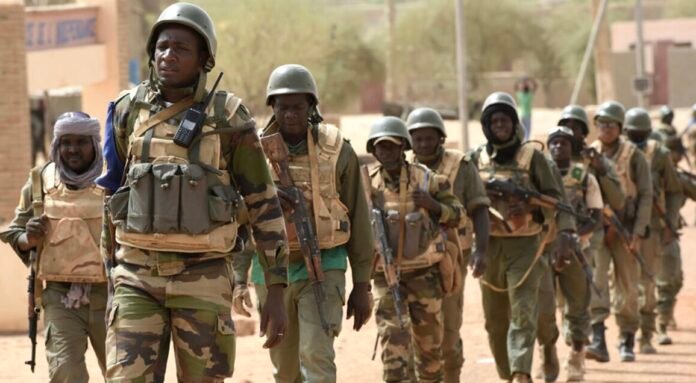
Human Rights Watch (HRW) has alleged that Malian government troops and allied militia groups were responsible for the killing of at least 31 civilians during coordinated attacks on two villages in the central Segou region, an area increasingly targeted by insurgents aligned with al Qaeda. The findings were detailed in a report published on Tuesday.
According to HRW, the first incident occurred on Oct. 2 in the village of Kamona, where security forces and local militia fighters allegedly rounded up and executed at least 21 men before setting fire to several homes. A second attack, roughly 55 km away in the village of Balle, left at least 10 additional civilians dead, including one woman.
Eyewitness accounts collected by HRW describe soldiers and militia members accusing residents of aiding Jama’at Nusrat al-Islam wal-Muslimin (JNIM), the al Qaeda-linked coalition that has extended its influence into southern Mali in recent months. One survivor, a herder who hid inside an abandoned house with his young daughter, later told investigators he discovered 17 bullet-riddled bodies scattered across the village.
The Malian army and the African Union had not issued immediate responses to the allegations as of Tuesday. HRW called on the Malian authorities to launch an independent investigation and urged regional bodies, including the AU, to intensify efforts to address escalating abuses and secure accountability for violations committed by all sides in the conflict.
Mali’s security crisis has continued to worsen despite the government’s efforts to suppress jihadist advances. Armed groups have carried out frequent attacks on military bases and critical infrastructure. In recent weeks, they have also imposed a fuel blockade that has triggered long lines at petrol stations and heightened operating costs for communities dependent on diesel generators.
Amid growing international concern, Mali’s foreign minister sought to reassure the public this week, rejecting claims that militant groups were close to threatening the capital, Bamako. However, analysts warn that without meaningful reforms, oversight, and improved protection for civilians, the cycle of violence in central Mali is likely to persist.
Source:Africa Publicity