

By Isaac Christopher Lubogo
He Gives Sleep to His Beloved — A Theology of Rest and Restlessness
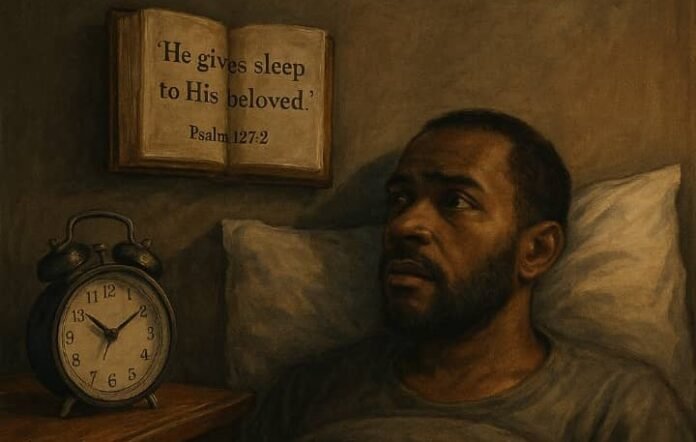
The Psalmist once wrote, “He gives sleep to His beloved.”
And I have pondered that verse more times than I have closed my eyes in peace.
If the Scripture is true — and I believe it is — then sleep must be more than a biological function.
It must be a divine transaction, a signature of grace, a gentle covenant between God and His creation.
So why, then, does His beloved toss through the night?
Why do those who believe, those who pray, those who serve, find their eyes wide open at 2:47 a.m., staring into the black ceiling of their fatigue?
Why do they clutch pillows as if they were promises and count hours as if they were sins?
If He gives sleep to His beloved, why do we — the supposedly beloved — swallow diazepam, amitriptyline, pilatone, temazepam, or drown our souls in alcohol just to sedate the mind He meant to soothe?
Why do we medicate what was meant to be a miracle?
When we were young, sleep was effortless — almost disrespectfully abundant.
Our parents scolded us for oversleeping, as though rest were an act of rebellion.
Back then, the world waited for us. Time was slow, and tomorrow was patient.
We slept because we trusted — trusted that morning would come, and life would continue.
But as years pile up, something changes.
We grow wise but restless, wealthy but weary.
Sleep, that once familiar friend, becomes a distant visitor.
It no longer comes when called — it demands persuasion.
We lie in beds designed for comfort yet find no rest.
The mind keeps vigil over the body like a suspicious guard.
We scroll through phones, pray halfheartedly, replay conversations, replay regrets.
We take one pill for anxiety, another for sleep, and a third for the side effects of the first two.
And yet — we cannot sleep.
Perhaps the problem is not the body.
Perhaps it is the soul that refuses to rest.
We are burdened by thoughts too heavy for dreams — by guilt unresolved, ambitions unfulfilled, fears unnamed.
We lie awake not because of noise outside, but because of storms within.
It is not caffeine keeping us up; it is conscience.
And perhaps that is why the Psalmist’s verse is not just biological poetry, but spiritual irony.
He gives sleep to His beloved — but only when His beloved learns to trust.
Sleep, then, is a form of faith — the quiet confidence that the world will continue spinning even when our eyes close.
To rest is to surrender to divine governance.
Sleep, therefore, becomes the truest test of belief.
It is one thing to declare faith in daylight, another to surrender to it at midnight.
Insomnia, in that sense, is not merely a medical condition; it is sometimes a symptom of spiritual turbulence.
We are not sleepless because God has withheld His gift.
We are sleepless because we have lost the art of receiving.
We have built lives so loud, so hurried, so artificially illuminated, that even night cannot convince us to stop pretending we are gods.
And so we lie awake, trying to outthink the darkness, while heaven quietly whispers, “I give sleep to My beloved — if only they would let Me.”
Prologue: When Sleep Becomes a Luxury
There was a time when I was acting as lawyer for Bobi Wine.
In a rare moment of candor, he told me,
“Isaac, if they gave you my life for one week, you probably wouldn’t survive.”
He wasn’t bragging; he was confessing.
He was a man chased by his own fame — a fugitive of sleep.
Behind the blinding stage lights and cheering crowds was a body that hadn’t rested in years.
I thought about that often — how sleep, that humble equalizer, deserts those who most need it.
And then, one night, I watched another friend — a Member of Parliament — drive from Jinja to Kampala, eyes battling fatigue, body surrendering to exhaustion.
I told him, “Pull over, please, before the road takes your life.”
He parked. Within seconds, he was gone — not dead, but asleep.
The speed at which sleep embraced him humbled me.
It made me wonder: why does sleep visit some like a lover and abandon others like a debt collector?
I. The Paradox of Sleep
When we are young, we rebel against sleep.
We treat it as an inconvenience — an interruption to pleasure, discovery, and distraction.
But when we grow old, we beg for that same sleep like a lost inheritance.
In youth, we waste it.
In adulthood, we chase it.
In old age, we simulate it.
There is no better metaphor for human folly.
II. The Political Economy of Rest
Sleep is democracy in the body.
When it comes, it equalizes. Kings snore. Beggars dream. Professors drool. Children float.
But in our restless generation, sleep has been overthrown.
We live under the tyranny of productivity.
The modern man is a slave to his calendar, chained by caffeine and crowned with insomnia.
He treats rest as laziness and fatigue as a badge of honor.
Every empire — and every man — eventually collapses not by war, but by exhaustion.
III. The Metaphysics of Sleep
Philosophers rarely write of sleep, though it is the most democratic of metaphysical experiences.
When we sleep, we die partially — a small rehearsal of eternity.
Consciousness surrenders, ego dissolves, ambition pauses.
Sleep is where the president and the prisoner meet as equals — naked before the subconscious.
IV. The Anatomy of Sleeplessness — When Faith, Fear, and Fatigue Collide
There is a quiet cruelty in fatigue without sleep.
The body is tired — the muscles plead for rest — but the mind, like a disobedient child, refuses to obey.
Medicine calls it insomnia.
Philosophy might call it existential awareness.
Theology calls it lack of surrender.
Sleep is the body’s way of trusting God — the small death we practice nightly in faith that morning will come.
1. The Restless Soul
Most fail to sleep not because of caffeine, but because they carry tomorrow into tonight.
They lie down with ledgers of worry.
Sleep does not coexist with control.
It demands surrender, not effort.
2. The Modern Curse of 24-Hour Consciousness
We have become allergic to silence.
Our lights never go out.
Our cities never blink.
We scroll for comfort but find only noise.
We chase sleep through blue light and wonder why dawn feels heavier than dusk.
3. When Faith Fails the Flesh
Many of God’s beloved lie awake — pastors, mothers, scholars.
The spirit is willing, but the nervous system has a to-do list.
We take pills or whiskey, but they numb the body, not the soul.
True sleep depends not only on melatonin but on meaning.
4. The Wounds That Whisper in the Night
The mind awakens at 3:00 a.m. because truth is loudest when the world is silent.
Many do not suffer from overthinking, but underfeeling — emotions buried alive clawing their way out through darkness.
5. The Irony of Age
When we are young, we sleep because we can.
When older, we sleep because we must — but cannot.
Youth treats sleep as waste; age treats it as wealth.
6. The Philosophy of Fatigue
Fatigue is grace disguised as warning.
It is the body saying, “You have worked against yourself long enough.”
But we silence it with ambition.
7. The Silent Sermon of Sleep
Every night, sleep preaches the same gospel:
that life continues even when we are not in charge.
That time belongs not to the worker, but to the Creator.
Sleep is our body saying, “I believe.”
V. The Theology of the Pillow — Sleep as a Measure of Trust and Surrender
The pillow is a humble altar — the softest pulpit on which the hardest sermons are preached.
To sleep is to fall — and to believe you will be caught.
1. Anxiety: The Anti-Gospel of the Night
Anxiety preaches a false gospel — that everything depends on you.
Those who truly trust the God of the day can rest in the God of the night.
2. The Pillow as Confessional
The pillow receives our silent repentance.
It absorbs unshed tears and hears the sermons we never preach aloud.
Many turn restlessly not because the bed is uncomfortable, but because the soul is.
3. The Sin of Restlessness
Restlessness is not a sign of importance; it is the absence of peace.
The restless man prays, “Thy will be done,” but lies awake planning a revision.
4. The Grace Hidden in Fatigue
Even creation rested. The Sabbath was not exhaustion — it was satisfaction.
To rest is to imitate divinity.
5. The Luxury of the Poor and the Poverty of the Rich
The laborer snores in peace; the executive tosses in silk sheets.
The simple find what the sophisticated have lost — the capacity to let go.
6. The Night as Mirror of the Soul
At night, titles dissolve.
It is then that man meets himself — and many discover they have become strangers.
7. The Pillow and the Cross
Both are instruments of surrender.
On the Cross, Christ laid down His will; on the pillow, we lay down ours.
VI. The Social Contract of Rest
A rested society is a moral one.
Tired people are cruel; exhausted leaders are dangerous.
Maybe Africa doesn’t need another revolution — maybe it just needs a nap.
VII. Epilogue: The Benediction of Sleep
Sleep remains God’s most misunderstood gift — His nightly benediction over the chaos of our existence.
It whispers, “Enough for today.”
The question is not whether He gives sleep to His beloved —
He does.
The question is: are we still His beloved enough to trust Him with the night?