

Nigeria is set to take a major step toward strengthening its non-interest financial sector as the Financial Reporting Council of Nigeria (FRC) announced plans to adopt the Accounting and Auditing Organization for Islamic Financial Institutions (AAOIFI) standards into the nation’s financial reporting framework.
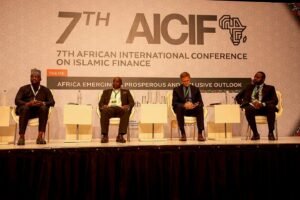
The move, according to the Executive Secretary and Chief Executive Officer of the FRC, Dr. Rabiu Olowo, is designed to enhance transparency, comparability, and investor confidence in the rapidly expanding Islamic finance industry. Dr. Olowo made the announcement in Lagos during his keynote address at the 7th Africa Islamic Finance Conference, which brought together policymakers, financial regulators, and industry stakeholders from across the continent.
Dr. Olowo explained that the integration of AAOIFI standards aligns with FRC’s mandate to set, monitor, and enforce accounting and financial reporting standards in Nigeria. He noted that the growing participation in Islamic banking, Sukuk (Islamic bonds), Takaful (Islamic insurance), and non-interest capital market products underscores the need for a structured, globally recognized reporting framework.
“The inclusion of AAOIFI standards into our national reporting framework is both a regulatory necessity and a strategic decision,” Olowo stated. “Nigeria’s financial system is evolving, and so must our regulatory environment. This initiative will strengthen public trust, promote ethical investment, and enhance the country’s reputation as a hub for Islamic finance in Africa.”
The FRC boss emphasized that the AAOIFI framework would complement existing International Financial Reporting Standards (IFRS) rather than replace them, providing clarity on the unique instruments and contracts used in Islamic finance, such as Murabaha (cost-plus financing), Ijara (leasing), and Mudaraba (profit-sharing).
He added that the adoption will also help ensure consistency, reliability, and global comparability in financial statements issued by Islamic financial institutions operating in Nigeria.
Speaking on behalf of Vice President Kashim Shettima, the Special Adviser to the President on Economic Affairs, Dr. Tope Fasua, commended the FRC’s efforts, describing Islamic finance as “a vital tool for ethical and inclusive economic development.”
“Islamic finance is rooted in fairness, transparency, and shared prosperity,” Fasua said. “It provides a pathway for sustainable growth by prioritizing real-sector investment and discouraging speculative activities.”
Also present at the event, His Royal Highness Muhammadu Sanusi II, the 14th Emir of Kano and former Governor of the Central Bank of Nigeria (CBN), applauded the FRC’s decision, describing it as a milestone for Nigeria’s financial system.
Sanusi noted that the Islamic finance industry in Nigeria has experienced “geometric growth” in recent years, with more banks and financial institutions seeking licenses to operate within the non-interest banking space.
“Islamic financing, by design, supports investment in real assets — infrastructure such as roads, energy, water systems, and digital networks,” Sanusi said. “If Nigeria can sustainably develop sectors like power through such financing models, achieving a $1 trillion economy becomes attainable.”
Experts at the conference agreed that adopting the AAOIFI standards would make Nigeria more attractive to Middle Eastern and Asian investors, who prioritize jurisdictions that comply with Islamic finance regulations.
The FRC is expected to begin stakeholder consultations with the Central Bank of Nigeria (CBN), the Securities and Exchange Commission (SEC), and other regulatory bodies before officially incorporating the AAOIFI standards into Nigeria’s national reporting system.
Once implemented, the initiative will place Nigeria among a growing list of African nations — including Sudan, Morocco, and Egypt — that have adopted international Islamic finance reporting standards to foster credibility and growth in their non-interest financial markets.
Source:Africa Publicity