
By Mahmud Tim Kargbo
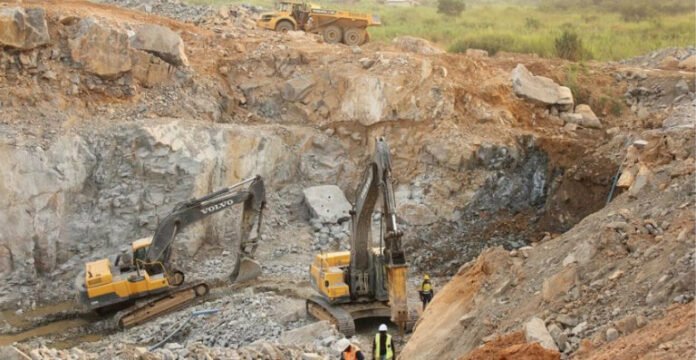
Despite its abundant natural wealth, Sierra Leone remains one of the most indebted nations in Africa. Each year, the country exports over a billion United States dollars’ worth of minerals, timber and marine resources; yet the State captures only a sliver of that value.
According to the Annual Economic Bulletin 2024 (http://www.mof.gov.sl/wp-content/uploads/2025/10/Annual-Economic-Bulletin-2024.pdf), Sierra Leone’s total mineral and timber exports reached US$1.14 billion in 2023 and US$1.20 billion in 2024, a modest rise of 4.7 per cent, largely driven by iron ore and diamond exports, while rutile and bauxite production declined.
However, the Annual Public Accounts 2024 (http://www.mof.gov.sl/wp-content/uploads/2025/08/Annual-Public-Accounts-2024.pdf) paint a bleaker fiscal picture. Government mineral revenues stood at just NLE 692,123 thousand (approximately US$28 million) in 2023 and NLE 1,017,017 thousand (around US$41 million) in 2024. That represents between 2.4 and 3.4 per cent of export value, meaning for every US$100 of minerals shipped abroad, the State collects less than US$4.
The Transparency Deficit
Fiscal opacity continues to plague Sierra Leone’s extractive sector. Although budget documents list royalties for iron ore, bauxite, rutile, gold and diamonds, the Public Accounts merge them into a single “Mineral Resources” category. This consolidation undermines transparency and contradicts the Truth and Reconciliation Commission’s (TRC) warning that “opaque natural resource governance perpetuates inequality and fuels public cynicism towards the State” (http://www.sierraleonetrc.org).
Timber exports suffer a similar fate. Though valued at US$3.25 million in 2023 and US$6.31 million in 2024, they are not recorded under any distinct forestry revenue heading, leaving their fiscal contribution to national revenue unknown.
By contrast, the fisheries and marine sector, smaller but more tightly regulated, shows stronger accountability. In 2023, fisheries exports worth US$33.5 million generated NLE 612,470 thousand (about US$46.1 million) in State receipts. Provisional mid-2024 data reported US$5.9 million in exports with NLE 79,900 thousand (around US$5.9 million) in receipts.
Sources: Annual Public Accounts 2023 (http://www.mof.gov.sl/wp-content/uploads/2024/08/Annual-Public-Accounts-2023.pdf); Mid-Year Fiscal Report 2024 (http://www.mof.gov.sl/wp-content/uploads/2024/10/Mid-Year-Fiscal-Report-2024.pdf); Ministry of Fisheries Press Briefing, July 2024 (http://www.mofmr.gov.sl).
Export Value vs. Government Take
Iron Ore: Export Value 2023, US$760.0M; Export Value 2024, US$830.0M; Government Receipts, US$27.5M; Retained by State, 3.3%
Diamonds: Export Value 2023, US$180.0M; Export Value 2024, US$210.0M; Government Receipts, US$8.1M; Retained by State, 3.8%
Bauxite: Export Value 2023, US$90.0M; Export Value 2024, US$65.0M; Government Receipts, US$2.0M; Retained by State, 2.2%
Rutile: Export Value 2023, US$70.0M; Export Value 2024, US$43.0M; Government Receipts, US$1.3M; Retained by State, 3.0%
Gold: Export Value 2023, US$10.0M; Export Value 2024, US$12.0M; Government Receipts, US$0.4M; Retained by State, 3.3%
Timber: Export Value 2023, US$3.25M; Export Value 2024, US$6.31M; Government Receipts, none recorded; Retained by State, not disclosed
Fisheries: Export Value 2023, US$33.5M; Export Value 2024, US$5.9M (mid-year); Government Receipts, US$46.1M; Retained by State, 137% (licences and arrears recovery)
Total Export Value 2023, US$1,146.75M; Total Export Value 2024, US$1,171.21M; Total Government Receipts approximately US$74.1M; Average Retained by State, 6.3% (2023)
Data: Annual Economic Bulletin 2024; Annual Public Accounts 2024; Audit Service Report 2023.
Comparative West African Fiscal Take
Sierra Leone: Diamond Revenue %, 3.8%; Iron Ore %, 3.3%; Gold %, 3.3%
Liberia: Diamond Revenue %, 8 to 10%; Iron Ore %, 7 to 9%; Gold %, not disclosed
Ghana: Diamond Revenue %, 10 to 12%; Iron Ore %, not disclosed; Gold %, 6 to 8%
Guinea: Diamond Revenue %, 6 to 8%; Iron Ore %, 5 to 7%; Gold %, not disclosed
Sources: Liberia Ministry of Finance (http://www.mof.gov.lr); Ghana Minerals Commission (http://www.mincom.gov.gh); Guinea Ministry of Mines (http://www.mines.gov.gn).
Sierra Leone’s retention rate remains the lowest among comparable mineral exporters in the region, underscoring chronic governance weakness and structural inefficiency.
The Debt Dilemma
According to the Public Debt Statistical Bulletin 2023 (http://www.mof.gov.sl/wp-content/uploads/2024/09/Public-Debt-Bulletin-for-2023_final-compressed.pdf), Sierra Leone’s total public debt stock stood at NLE 63.69 billion at the end of 2023, with external debt at NLE 42.91 billion and domestic debt at NLE 20.78 billion.
By December 2024, local reporting estimated the total public debt at approximately US$3.1 billion (SierraLoaded, 2024: http://www.sierraloaded.sl/news/sierra-leones-debt-hits-3-1-billion/).
Rising debt obligations, combined with poor resource revenue performance, continue to constrain the State’s ability to fund social services. The paradox is clear: a nation rich in natural resources borrowing heavily to sustain basic expenditures.
Development Strategy and Governance Challenges
This reality raises urgent questions about Sierra Leone’s development strategy. If these resources were wisely managed, would the government still need to borrow from the International Monetary Fund, the World Bank or the African Development Bank? Could improved resource governance not generate sufficient domestic revenue to finance national infrastructure, education and healthcare without adding to external debt?
Equally troubling is the persistence of state-sponsored corporate theft. Given the magnitude of looting that continues to plunge citizens deeper into poverty, it is difficult to justify any administration claiming to be “improving Sierra Leone’s image abroad” while national wealth is handed to corporate rogues and political allies.
Many citizens view this as the worst replay of former President Ernest Bai Koroma’s exploitative model. After President Julius Maada Bio took over the affairs of the state, seven years of international engagements and expensive image-building tours have produced little substance. Sierra Leone remains near the bottom of the global Human Development Index, suffering from poor education, inadequate healthcare, decaying infrastructure and staggering unemployment.
The UNDP Human Development Report 2023 (http://www.undp.org/sierra-leone/stories/vice-president-sierra-leone-launches-global-human-development-report) ranked Sierra Leone 184th out of 193 countries, with an HDI value of 0.458. The Global Hunger Index 2024 (http://www.globalhungerindex.org/pdf/en/2024/Sierra-Leone.pdf) placed it 117th out of 127 countries, with a score of 31.2, categorising hunger as “serious”.
The International Labour Organisation (http://www.ilo.org/global/lang-en/index.htm) reports that more than 60 per cent of Sierra Leone’s working-age population is unemployed or underemployed. Education outcomes remain weak due to limited teacher training, poor learning environments and inadequate infrastructure (World Bank: http://www.worldbank.org/en/country/sierraleone/publication/education-overview; UNESCO: http://www.unesco.org/en/education).
Policy experts argue that the government’s dependence on foreign loans while tolerating massive revenue leakages is unsustainable. They call for urgent reforms: full commodity-level disclosure of mineral, timber and fisheries revenues; integrated tracking systems linking the National Revenue Authority, the Ministry of Mines and the Ministry of Fisheries; full enforcement of the Extractive Industries Revenue Act; publication of all resource contracts; and adoption of real-time monitoring to prevent fiscal leakages.
Sierra Leone exports over US$1 billion annually, retains less than US$75 million in fiscal returns, and owes more than US$3 billion in public debt. Until governance aligns with constitutional accountability and TRC recommendations, the nation’s resource wealth will remain underutilised, public trust will continue to erode and poverty will persist.
True leadership must prioritise domestic transformation over external image-building, ensuring that natural wealth finally serves the citizens who own it.