
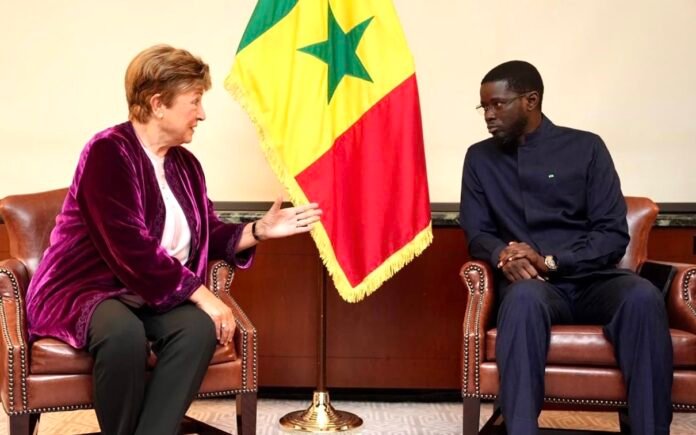
The International Monetary Fund has prolonged its technical mission in Senegal beyond the originally scheduled timeline, according to a spokesperson for the Fund, signalling that talks are becoming more intensive as both sides attempt to reach an agreement on a potential new support programme.
An IMF delegation has been in Dakar since October 22, engaging with authorities on a fresh arrangement after Senegal’s previous US$1.8 billion Extended Credit and Extended Fund Facility programme was frozen earlier in 2024. The freeze came after the newly elected administration revealed billions of dollars of previously undisclosed liabilities that had not been captured in earlier public debt reports.
“We have had constructive engagements with Senegal’s authorities. The dialogue is ongoing to identify the right mix of reforms and policy actions that could form the basis of a new IMF-supported programme,” the spokesperson told Reuters. The Fund also confirmed that it will release a concluding communiqué once the mission ends.
Senegal’s debt challenges remain at the centre of investor scrutiny. With hidden debt now estimated to exceed US$11 billion, the IMF projects that the country’s overall debt burden — incorporating sovereign debt, obligations of state-owned enterprises, and accumulated domestic arrears — stood at around 132% of GDP by the close of 2024. This is one of the highest ratios in the region and far above the 70% West African regional convergence threshold.
Global bondholders and development partners are divided over the likely outcome of the discussions. Some analysts expect the IMF may insist on debt restructuring or reprofiling to restore sustainability — a step Senegal’s leaders have publicly resisted, due to fears of market backlash and potential reputational damage. Others believe the Fund may instead recommend a tougher fiscal consolidation path paired with structural reforms to public financial management.
Senegal’s government has previously signaled that it wants to avoid the stigma associated with a restructuring, especially at a time when the country is positioning itself for hydrocarbon production expected to ramp up between 2025 and 2026.
The extension of the mission suggests both sides are still negotiating key conditions and reform commitments — including transparency measures, spending controls, and improvements to debt data reporting — all of which are likely to be central to any new IMF programme.
Source:Africa Publicity