

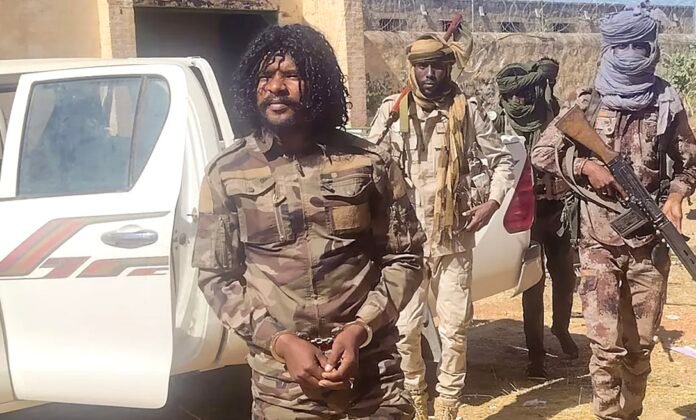
Fresh allegations of mass killings in Sudan’s Darfur region are intensifying global scrutiny on Rapid Support Forces (RSF) Brigadier General al-Fateh Abdullah Idris — widely identified by his nickname, Abu Lulu — as the paramilitary group established full control over El Fasher after an 18-month siege.
El Fasher had served as the final operational stronghold of the Sudanese Armed Forces’ 6th Infantry Division. Following the city’s fall, graphic videos circulated online showing a commander, believed to be Abu Lulu, executing unarmed men at close range. Reuters and international media have reported multiple attempts to authenticate the footage, though conclusive verification remains difficult in a city under blackout and conflict.
RSF denies responsibility but crisis deepens
The RSF claims that Abu Lulu has been arrested and will face prosecution, yet rights monitors and war crimes researchers say he is strongly associated with summary executions, forced conscription, ethnically targeted killings, sexual violence and the torture of captive civilians during the final phases of the El Fasher offensive.
Humanitarian groups say at least 60,000 civilians have fled the city. Médecins Sans Frontières and other aid organisations say the situation is deteriorating into a major humanitarian catastrophe as medical facilities have been targeted or destroyed.
WHO officials have reported the killings of between 460 and 500 people at the Saudi Maternity Hospital alone — including patients, caregivers and medical workers — and accuse RSF fighters of kidnapping four doctors, a pharmacist and a nurse and allegedly demanding over US$150,000 ransom for their release. The Sudan Doctors Union separately estimated that at least 1,200 other civilians were killed in medical facilities across the region.
A commander with a violent profile — and unclear origins
Abu Lulu, believed to be in his early 40s, has existed mostly in rumours and battlefield videos. Analysts say he commanded RSF siege operations around El Fasher for months. Witnesses told local media he personally shot one man solely because of his ethnic identity, and that he openly boasted in videos about killing over 2,000 people — most of them civilians.
Several regional commentators allege, without documentary proof, that he may be a close relative of RSF leader Mohammed Hamdan Dagalo (Hemedti). Both men rose from the militia structures of the Janjaweed — an Arab-dominated fighting network that was widely blamed for atrocities during the 2003-2005 Darfur war.
International concern grows
The United Nations has warned that documented RSF actions in El Fasher appear to meet the legal threshold for war crimes and crimes against humanity. Anonymous security analysts say that casualty figures from just the last five days before El Fasher’s fall may equal or exceed the total civilian death toll of the entire civil war up to that point.
Tanzania Cautions Citizens on Posting Graphic Content as Questions Grow Over Election Deaths
Sudan’s war — which erupted in April 2023 from a power struggle between RSF chief Hemedti and army ruler Abdel Fattah al-Burhan — has now triggered one of the world’s worst displacement crises. International legal experts say evidence from El Fasher will likely become central to future prosecutions — whether inside Sudan or through global courts.
Source:Africa Publicity