

By: Isaac Christopher Lubogo
“To recognize those who have labored, lived, and loved in our land is not merely to name them; it is to expand the very soul of the nation, proving that belonging is forged not only by blood, but by courage, contribution, and the audacity to call Uganda home.” Isaac Christopher Lubogo
Prologue:
The Debate on Ugandanizing the Ugandan Indian Community
To speak of “Ugandanizing” the Indian community in Uganda is to enter a delicate labyrinth where history, identity, law, and morality intersect. It is not merely a question of nomenclature or legal classification; it is a profound inquiry into what it means to belong, to be recognized, and to be woven into the complex tapestry of a nation forged by struggle, resilience, and pluralism.
Uganda’s national story is a symphony of migrations, settlements, and cultural syntheses. The Indian diaspora—arriving as laborers, traders, and professionals under colonial rule—did not merely occupy space; they cultivated infrastructure, nurtured commerce, and helped shape the economic arteries of the country. Yet, despite their long-standing contribution, historical ruptures—most dramatically the expulsion of 1972—have left an enduring question: can legal recognition reconcile decades of both exclusion and contribution?
At the heart of this debate lies the tension between indigeneity and integrative belonging. Uganda’s Constitution enumerates 56 indigenous communities, each with historical claims grounded in ancestral lineage, traditional governance, and cultural continuity. The Indian-Ugandan community, by contrast, stakes its claim through generational presence, economic integration, cultural assimilation, and civic participation. Here emerges a philosophical query: does belonging require origin, or can it be cultivated through sustained loyalty, contribution, and shared destiny?
The discourse transcends law and enters the realm of ethical jurisprudence and social philosophy. Recognition is not merely a bureaucratic exercise; it is a moral act that affirms the principles of inclusion, equity, and justice. It asks Ugandans to consider: can a nation honor its indigenous roots while embracing communities that, through persistence and integration, have become part of its soul?
Furthermore, the debate is a mirror reflecting Uganda’s future: a nation poised to redefine identity, citizenship, and unity in a world where migration, globalization, and historical disruptions continually reshape societies. The Ugandan-Indian case is not an anomaly; it is a lens through which Uganda can explore the evolution of nationhood, the elasticity of identity, and the courage to transform legal categories into instruments of reconciliation and cohesion.
In essence, to “Ugandanize” the Indian community is to engage with the very meaning of Ugandan-ness itself—asking the nation to reconcile memory with aspiration, law with morality, and diversity with unity. It is an intellectual and ethical odyssey that challenges Ugandans to craft a vision of citizenship that is as inclusive as it is principled, as legally sound as it is socially profound.
1. Introduction
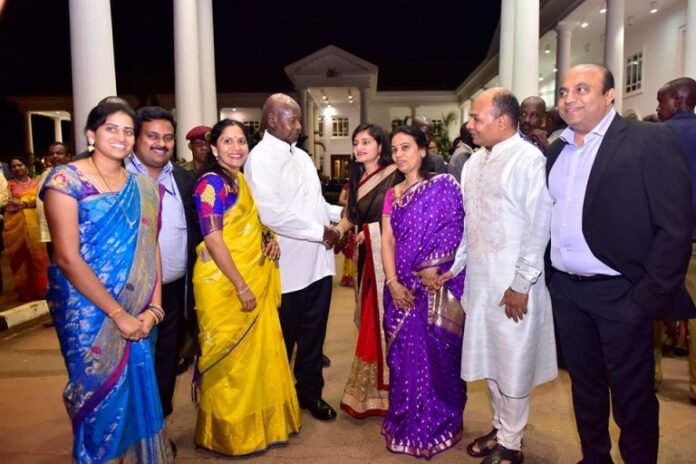
The announcement by President Yoweri Kaguta Museveni on 28 October 2025, pledging to consider recognizing the Indian community as a Ugandan tribe, represents a pivotal moment in Uganda’s nation-building narrative. This discourse explores the historical roots, socio-economic contributions, legal pathways, ethical justifications, and policy implications of such recognition.
Recognition here is not merely ceremonial; it is an affirmation of belonging, historical presence, and contribution, extending the conceptual boundaries of “tribe” in the Ugandan constitutional and social imagination. The Indian-Ugandan community, long settled and interwoven into Uganda’s economic and cultural fabric, demands an analytical framework that balances law, history, and social justice.
2. Historical Trajectory of the Indian Community in Uganda
2.1 Arrival and Settlement
The Indian community in Uganda primarily arrived under British colonial administration during the late 19th and early 20th centuries. They came in three main waves:
1. Indentured laborers for the Uganda Railway (1896–1901): Hailing largely from Punjab, Gujarat, and Bihar, they laid the infrastructural foundations of modern Uganda.
2. Entrepreneurs and traders: Indian merchants established urban commercial networks, engaging in wholesale trade, retail, and banking.
3. Professionals and intermediaries: Doctors, engineers, and civil servants provided technical expertise under colonial governance.
2.2 Socio-Economic Integration
By mid-20th century, Indians were indispensable to Uganda’s economy. They owned hotels, textile factories, import-export businesses, and financial institutions. Despite this, they faced social stratification, often segregated in urban enclaves yet maintaining interaction with indigenous communities.
2.3 Expulsion and Return
Idi Amin’s 1972 expulsion of Indians marked a tragic rupture, rooted in nationalist rhetoric and economic envy. Yet, many families returned in the 1980s and 1990s, reclaiming citizenship, rebuilding businesses, and reintegrating socially. The returnees demonstrate resilience and a generational commitment to Uganda as home.
3. Legal and Constitutional Pathways for Recognition
3.1 Constitutional Context
Uganda’s 1995 Constitution recognizes 56 indigenous communities. Key provisions include:
Article 10: Affirms national unity and respect for diversity.
Articles 32–34: Protect minority rights and provide for affirmative measures to safeguard marginalized groups.
Recognition of the Indian community as a tribe would require navigating these provisions. Legal avenues include:
1. Legislative Amendment: Expanding the constitutional list of recognized communities to include long-standing diaspora groups.
2. Interpretive Recognition: Using judicial or parliamentary interpretation to affirm that “tribe” may encompass communities with generational settlement, cultural integration, and socio-economic contribution.
3. Policy Mechanisms: Cultural councils, inter-tribal forums, and local government inclusion programs provide a de facto recognition path.
3.2 Comparative Legal Insights
Globally, diaspora communities have been integrated into national identity frameworks:
South Africa: Recognizes Indian South Africans as part of the cultural mosaic.
Kenya: Indian-Kenyans hold citizenship and are politically recognized without being termed a “tribe” but are included in affirmative economic and social programs.
Uganda can learn from such models, adapting them to constitutional and socio-political realities.
4. Socio-Economic and Cultural Justifications
4.1 Economic Contributions
Indian-Ugandans have historically:
Developed trade networks.
Created employment in manufacturing and services.
Contributed to financial institutions and fiscal stability.
Recognition reinforces their integral economic role.
4.2 Cultural Integration
Many Indian-Ugandans have adopted Luganda and other local languages.
Intermarriage with indigenous Ugandans has created hybrid cultural expressions.
Participation in national events demonstrates commitment beyond commerce.
4.3 Generational Belonging
Recognition acknowledges that citizenship alone does not capture the depth of belonging forged over generations. Indian-Ugandans consider Uganda home; this recognition aligns legal and social identities.
5. Ethical and Policy Considerations
5.1 Equity vs. Indigeneity
Critics may argue that tribal recognition should be reserved for historically indigenous populations. However, ethical governance demands inclusion of groups demonstrating sustained presence, contribution, and commitment to national unity.
5.2 Precedent and Social Cohesion
Precedent: Recognition could inspire other long-settled diaspora groups to seek similar status.
Cohesion: A transparent, consultative process mitigates ethnic tensions and fosters inclusive nationalism.
6. Recommended Pathways
1. Stakeholder Consultations: Engage parliament, legal scholars, cultural leaders, and Indian-Ugandan representatives.
2. Constitutional and Legal Review: Examine amendments or interpretive rulings to ensure lawful recognition.
Constitutional and Legal Review – Detailed Analysis
Recognition of the Indian community as a Ugandan tribe is not just symbolic; it intersects with constitutional law, legislative precedent, and international standards of minority rights. The goal of Recommendation Two is to map out a robust legal framework that ensures recognition is both lawful and sustainable.
1. Understanding the Constitutional Landscape
Uganda’s 1995 Constitution is the supreme legal instrument and currently recognizes 56 indigenous communities as tribes. Key provisions relevant to this recognition include:
1. Article 10 – National Unity and Integration
Promotes national cohesion and the protection of all groups.
Provides the ideological basis to include long-settled diaspora communities that contribute to the national fabric.
2. Articles 32–34 – Minority Rights
Protect minorities from discrimination.
Provide for affirmative measures to preserve cultural heritage and participation in governance.
3. Article 189 – Amendment Procedures
Any constitutional inclusion of a new tribe may require a constitutional amendment, passed by a two-thirds majority in Parliament and ratified by at least 50% of district councils.
Implication:
A legal review must determine whether recognition of the Indian community as a tribe constitutes an amendment to the list of tribes or can be achieved through interpretive affirmation, such as a policy declaration backed by law.
2. Legal Pathways for Recognition
2.1 Constitutional Amendment
Mechanism:
Parliament drafts a bill amending the schedule listing recognized tribes.
Requires a supermajority for adoption and regional consultation.
Pros:
Full legal certainty and permanence.
Recognized across all institutions, including judiciary, electoral, and cultural bodies.
Cons:
Politically sensitive, potentially triggering debates on indigeneity vs. settler communities.
Time-consuming and requires extensive public engagement.
2.2 Judicial Interpretation / Declaratory Recognition
Mechanism:
The Judiciary, potentially the Constitutional Court, can interpret “tribe” in a broader sense to include communities with historical presence, cultural integration, and generational belonging.
Pros:
Avoids the lengthy amendment process.
Can leverage existing minority protection provisions (Articles 32–34).
Cons:
Less permanent than constitutional amendment.
May be contested politically or socially, especially by groups emphasizing indigenous rights.
2.3 Legislative or Policy Recognition
Mechanism:
Parliament or the Executive issues a resolution or law recognizing Indian-Ugandans as a tribal community for cultural and administrative purposes.
Integration in cultural councils, heritage boards, and local governance structures.
Pros:
Flexible and implementable in the short term.
Provides de facto recognition while longer legal processes proceed.
Cons:
May lack full constitutional backing.
Recognition might be limited in scope, e.g., affecting cultural councils but not electoral or resource rights.
3. Legal Principles to Guide Recognition
1. Doctrine of Generational Presence
Recognition can hinge on communities that have lived in Uganda for multiple generations, contributing to society economically and culturally.
2. Principle of Equality and Non-Discrimination
Denying recognition solely based on non-indigenous origin could violate Articles 21 and 32 of the Constitution.
3. Principle of Public Interest and National Cohesion
Recognition must enhance national unity, promote investment, and strengthen social integration.
4. Subsidiarity Principle
Recognition should first occur in cultural and local governance frameworks, building legitimacy before national constitutional acknowledgment.
4. Comparative Legal Precedents
South Africa: Indian South Africans are recognized as part of the national multicultural framework, with full citizenship and cultural rights.
Kenya: The Indian-Kenyan community is politically represented and culturally integrated, even if not termed a “tribe.”
Canada: Long-settled diaspora communities gain cultural recognition and minority rights through legislation and policy frameworks, not formal tribal classification.
Implication: Uganda can adopt a hybrid model: start with policy recognition (legislative or administrative), then transition to constitutional inclusion once social and political consensus is established.
5. Implementation Roadmap for Recommendation Two
1. Legal Audit:
Engage constitutional lawyers and scholars to review Articles 10, 32–34, 189, and relevant minority protections.
Identify legal gaps or constraints in formally recognizing the Indian community.
2. Draft Recognition Bill / Policy:
Prepare either a constitutional amendment draft or a statutory resolution for parliamentary approval.
3. Public Consultations:
Conduct nationwide consultations, especially with indigenous tribal leaders, to mitigate perceptions of favoritism or threat to indigeneity.
4. Integration into Cultural and Governance Bodies:
Ensure immediate inclusion in cultural councils, inter-tribal forums, and local government committees to establish functional recognition.
5. Judicial Safeguards:
Seek declaratory support from the Constitutional Court to affirm legality and pre-empt litigation from dissenting parties.
6. Key Challenges and Mitigation
Challenge Mitigation
Perception of undermining indigenous tribes Public education campaigns on historical contribution and integration
Political opposition in Parliament Build consensus through cross-party dialogue and highlighting economic/social benefits
Legal ambiguity over “tribe” definition Judicial interpretation and scholarly consultation
Precedent for other diaspora groups Adopt transparent criteria based on generational presence, cultural integration, and national contribution
7. Conclusion
Recommendation Two is central to achieving legally sound, sustainable recognition of the Indian community. By combining constitutional review, legislative action, and judicial interpretation, Uganda can create a framework that:
Acknowledges historical contribution.
Strengthens national unity.
Ensures legal certainty for future generations.
The pathway must balance legal rigor, political feasibility, and social legitimacy, ensuring that recognition is both lawful and widely accepted.
3. Gradual Integration: Begin with cultural, social, and local governance inclusion, transitioning to formal tribal status.
4. Public Education: Promote understanding of the Indian community’s historical role and contribution to national development.
7. Conclusion
Recognition of the Indian community as part of Uganda’s tribal family is historically justified, legally feasible, and socially desirable. It affirms multi-generational belonging, enhances economic participation, and strengthens national cohesion. President Museveni’s assurance signals a readiness to embrace Uganda’s multicultural reality, merging historical acknowledgment with forward-looking legal and policy innovation.
8. References
Daily Express, 28 October 2025: Museveni assures to recognize Indian community as part of Uganda’s tribal family
Constitution of Uganda, 1995
Tripp, A. M. Museveni’s Uganda: Paradoxes of Power in a Hybrid Regime.
Jayawardena, C. Indian Diaspora in East Africa: Historical Perspectives.
South African Department of Arts and Culture: Recognition of cultural communities.