
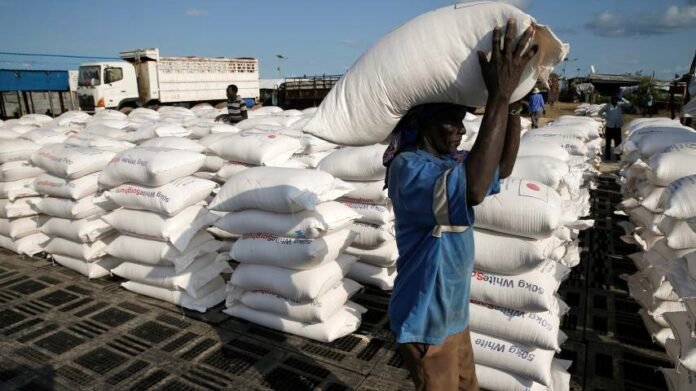
The United States issued one of its sharpest warnings to South Sudan in recent years on Thursday, signalling that humanitarian assistance to the country could be drastically scaled back unless Juba removes what Washington has described as unlawful and excessively high fees placed on aid shipments.
In a bluntly worded statement titled “Time to Stop Taking Advantage of the United States,” the U.S. Bureau of African Affairs accused South Sudan’s transitional government of deliberately obstructing humanitarian efforts through inflated charges and administrative barriers that have slowed or blocked deliveries of food, medical supplies, and essential relief materials.
The statement also criticised the government for hindering United Nations peacekeeping operations, adding to the growing list of grievances Washington has raised over the past year.
Background: South Sudan’s Aid Dependency and Ongoing Instability
South Sudan remains one of the world’s most aid-dependent nations. Since gaining independence in 2011, the country has endured cycles of conflict, political tensions, and economic collapse. Although a 2018 peace agreement formally ended a brutal five-year civil war—one that left an estimated 400,000 people dead—violence persists in several regions, driven by militia groups, political rivalries, and competition over resources.
The humanitarian toll is immense. Most of South Sudan’s population of nearly 12 million faces severe food insecurity, according to UN agencies. Millions depend on foreign assistance for survival.
The United States has long been the country’s single largest humanitarian donor, providing billions of dollars across emergency food aid, health programs, peacekeeping support, and development initiatives. But Washington has become increasingly frustrated with what it sees as systematic corruption and obstruction by South Sudanese officials.
US Accusations: “Exorbitant Fees” and Violations of International Obligations
In its Thursday statement, the U.S. government accused South Sudan of levying “exorbitant fees on humanitarian shipments,” a move it said directly endangered the lives of vulnerable citizens. These charges have been a contentious issue for years, as aid groups frequently report unexpected taxes, customs delays, and demands for payments by local officials.
“These actions constitute egregious violations of South Sudan’s international obligations,” the statement said, urging the transitional government to halt all fee collections on humanitarian goods without delay.
Washington also cited what it described as interference with UN peacekeeping activities, including restrictions on movement and operations of the United Nations Mission in South Sudan (UNMISS), which plays a crucial role in protecting civilians and monitoring ceasefire agreements.
Possible Consequences: Aid Cuts Under Review
The statement made clear that failure to address these concerns will carry severe consequences.
“If it does not [halt these actions], the United States will initiate a comprehensive review of our foreign assistance in South Sudan with the likelihood of making significant reductions,” the Bureau of African Affairs warned.
Given that the US is the country’s primary humanitarian donor, any cut would have sweeping implications. International organisations have already reported widening funding gaps this year, aggravated by Washington’s broader reduction in foreign aid budgets.
Analysts worry that further cuts could intensify hunger, weaken health services, and worsen instability at a time when the region is also grappling with spillover effects from the war in neighbouring Sudan.
Silence From Juba as Criticism Mounts
South Sudan’s humanitarian affairs minister did not immediately respond to requests for comment. However, Juba has historically pushed back at international criticism over its management of aid access.
Foreign donors, including the US and European partners, have publicly objected for years to what they describe as recurring attempts by South Sudanese authorities to impose taxes on humanitarian imports. Aid groups argue that such fees not only undermine relief operations but often end up enriching political or local elites rather than supporting the broader population.
Debate Over Causes of Humanitarian Crisis
While the United States and the United Nations have repeatedly linked South Sudan’s humanitarian crisis to corruption and mismanagement, the government has rejected these characterisations.
A UN investigative panel reported in September that corruption among political elites was the primary driver of the country’s worsening food and economic crisis.
Juba dismissed that conclusion, instead attributing the crisis to a combination of ongoing local conflict, climate disasters like flooding, and losses in oil revenue triggered by the ongoing war in Sudan, which has disrupted pipeline exports.
Source:Africa Publicity